Technical & Engineering Deep-Dives · 2026-11-28
The Unseen Force: Aerodynamic Evolution in WRC Rallying
Explore the profound evolution of aero packages in the World Rally Championship, from Group B's raw power to today's sophisticated hybrid machines, and how managing airflow became critical for victory.
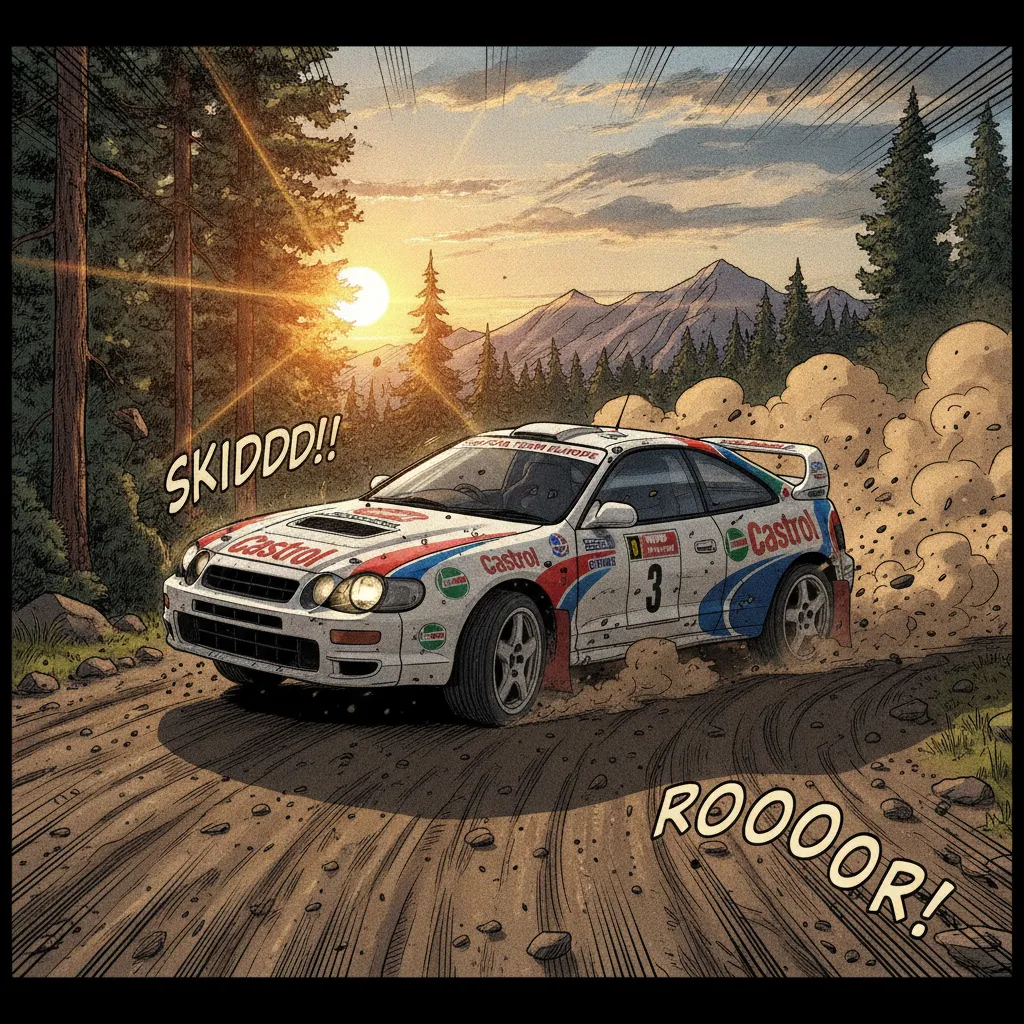
The quest for speed in the World Rally Championship is a relentless pursuit, where milliseconds dictate victory. While engine power and chassis dynamics often seize the spotlight, the often-unseen science of aerodynamics has undergone a profound evolution, transforming rally cars from rudimentary boxes into sophisticated aero instruments. From the raw, unadulterated power of Group B to the high-tech hybrid monsters of today, aero packages have played an increasingly critical role.
The Group B Dawn: A Force Untamed
Group B machines, while iconic for their ballistic power-to-weight ratios, largely overlooked sophisticated aero. Early examples like the Audi Quattro S1 developed monstrous downforce at speed through massive rear wings and front splitters, yet much of this was brute-force rather than finely tuned airflow management. Cars like the Lancia 037 relied more on lightweight construction and mid-engine balance. It was an era where downforce was a desirable byproduct, not a primary design objective, with turbulent air often an accepted compromise. As speeds escalated, designers began to understand the imperative of managing air to maintain stability and grip on loose surfaces.
WRC's Aerodynamic Awakening: Precision and Innovation
The transition to Group A and subsequently the WRC era in the 1990s marked a significant shift. Homologation specials like the Toyota Celica GT-Four ST205 showcased increasingly refined aero. While its infamous 'active turbo restrictor' highlighted a quest for power, the growing focus on front splitters, side skirts, and prominent rear wings was undeniable. Subsequent cars, such as the Subaru Impreza WRC and Mitsubishi Lancer Evo series, leveraged wind tunnel testing and early computational fluid dynamics (CFD) to optimise lift reduction and downforce generation, crucial for high-speed stability and braking zones on tarmac and fast gravel stages. Every surface, from roof vents to mirror stalks, became a potential aero element.
The Modern Era: Extreme Aero and Hybrid Demands
Today's Rally1 hybrid machines represent the pinnacle of rally aero development. Drawing heavily from circuit racing principles, they feature intricate front bumpers with aggressive splitter designs, deeply sculpted side sills that channel airflow, and multi-element rear wings that verge on full-width diffusers. The introduction of hybrid powertrains has added another layer of complexity, demanding efficient cooling without compromising aero efficiency. Teams employ advanced CFD simulations and extensive wind tunnel analysis to optimise every component, extracting every possible gram of downforce and managing drag meticulously. The result is a machine that generates substantial aerodynamic grip, enhancing tyre contact on dynamic surfaces and allowing incredible cornering speeds, proving that in rally, the air is as much a weapon as the horsepower.
If this has you shopping rather than reading, start with the rally cars for sale from teams and privateers across Europe.
Searching to buy:
See all listings
N4 · 2011
2011 Subaru Impreza WRX STI GR Group N
- AWD / 4x4
- 300 hp
- H-pattern dog box

N4 · 2006
2006 Mitsubishi Lancer Evolution IX N4
- AWD / 4x4
- 280 hp
- H-pattern dog box

Open · 2013
2013 Mitsubishi Lancer Evolution X R4
- AWD / 4x4
- 320 hp
- Sequential
Want to sell yours? Listing a rally car or parts is free.
Post your Ad