Legendary Cars & Engineering · 2026-10-30
Unleashing the Winds: The Aerodynamic Revolution of Group B Rallying
Dive into the radical aerodynamic engineering that transformed Group B rally cars, exploring how wild wings and aggressive bodywork redefined downforce and stability at blistering speeds.
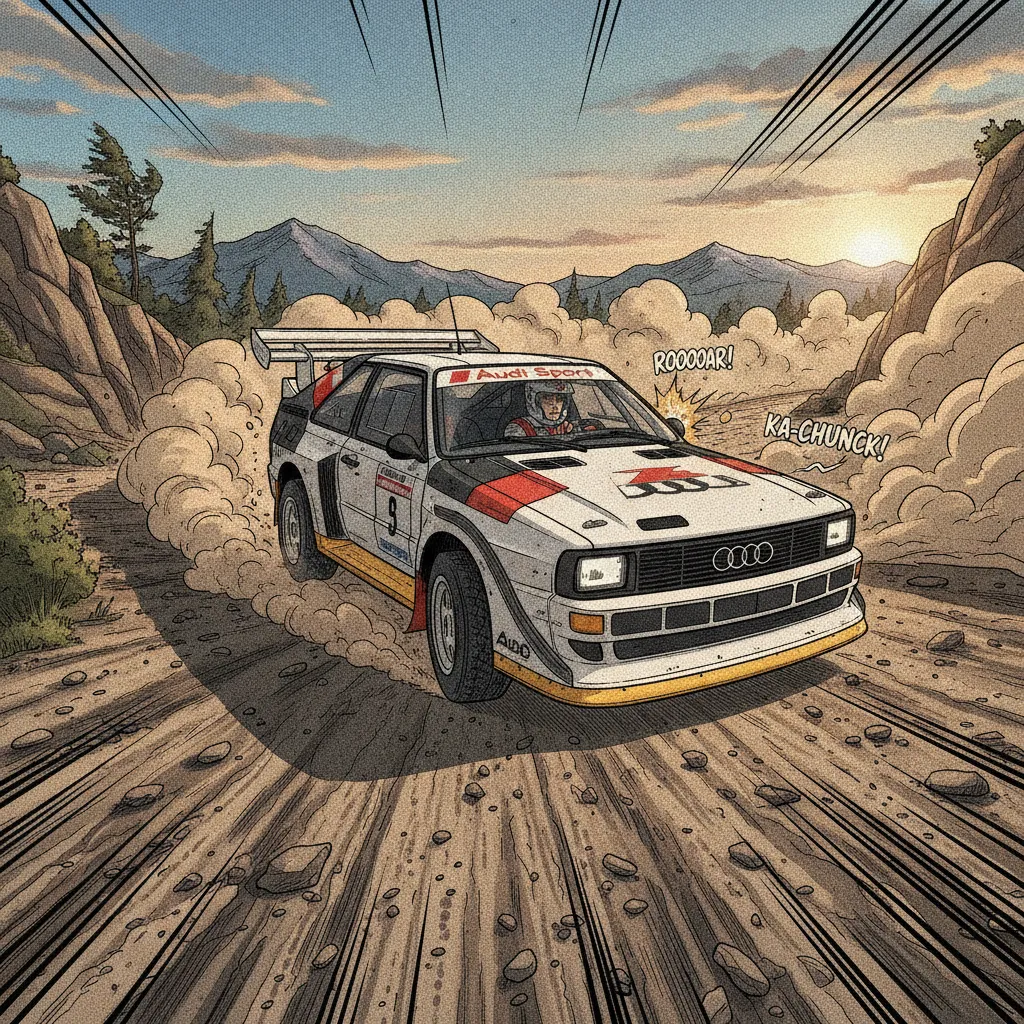
The Group B era of international rallying, often revered as the 'Golden Age,' was not merely defined by monstrous horsepower and all-wheel drive; it was equally a crucible for extreme aerodynamic innovation. As power outputs soared well beyond 500bhp and speeds reached unprecedented levels on treacherous surfaces, engineers quickly realized that harnessing the very air around these ballistic machines was paramount for control, traction, and ultimately, victory.
Engineering the Airflow: Downforce and Stability
Before Group B, rally car aerodynamics were largely an afterthought, often limited to minor spoilers or subtle bodywork tweaks. The Group B regulations, however, offered a liberating canvas. Teams like Audi, Lancia, and Peugeot pushed the boundaries, transforming their homologation specials into rolling laboratories of airflow management. The Audi Quattro S1 E2, with its colossal front splitter and towering rear wing, became the poster child for this radical shift. These components weren't just for show; they generated crucial downforce, pressing the car into the road and significantly increasing mechanical grip, particularly at higher speeds and through fast corners. This was vital for stability and responsiveness, allowing drivers to exploit the immense power on tap.
Beyond pure downforce, attention turned to airflow efficiency. Scoops, vents, and carefully sculpted body panels were integrated to manage thermal loads for turbocharged engines and potent braking systems. Side skirts and undertrays were experimented with to optimize ground effect, aiming to reduce lift and enhance stability without generating excessive drag on varied rally stages. The intricate balance between creating sufficient downforce for traction and minimizing drag for top-end speed became a core challenge for every engineering team. This aerodynamic arms race was as intense as the horsepower wars, forever changing the visual and technical landscape of rally car design, setting a precedent for the sophisticated aero packages seen in contemporary WRC machinery.
Ready to sell? List your rally car or parts for free.
Post an ad