Iconic Rallies & Culture · 2026-11-02
The Art of the Rally Jump: Mastering Flight and Landing in Extreme Terrain
Unpack the intricate physics and precise driver technique behind the spectacular rally jump, from controlled take-off to perfect landing on varied terrains.
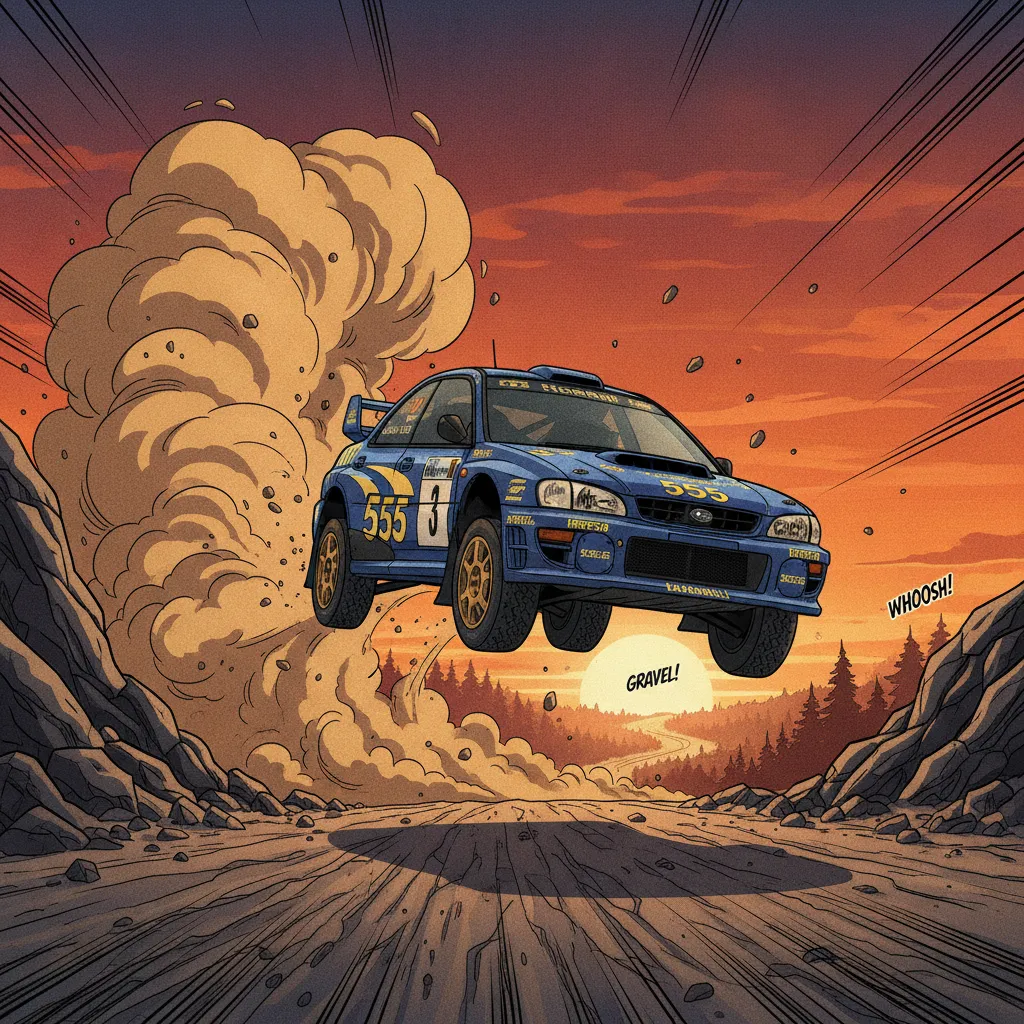
Few spectacles in motorsport capture the raw aggression and precision of rally quite like a car launching skyward over a blind crest. The rally jump, far from being a mere airborne moment, is a complex ballet of vehicle dynamics, intricate suspension tuning, and razor-sharp driver skill. For a truly competitive crew, mastering flight and landing is not just about showmanship; it's about maintaining momentum, preserving mechanical integrity, and shaving precious tenths off stage times.
The Pre-Flight Checklist: Preparation is Paramount
The foundation of a successful jump is laid long before the wheels leave the ground. Meticulous pace notes are critical, detailing not only the crest itself but also its severity, length, and the all-important landing zone. Drivers adjust their approach speed with surgical precision, often using a precise throttle lift or feathered braking to shift weight dynamics. The suspension setup is equally vital: a stiffer front end with controlled rebound helps prevent excessive nose-dive on take-off, while progressively damped rear springs absorb the immense forces of landing. The goal is to launch the car as level as possible, a delicate balance of speed, weight transfer, and chassis attitude.
Mid-Air Dynamics: Controlling the Uncontrollable
Once airborne, a rally car is momentarily divorced from its primary traction source, yet control is not entirely lost. Experienced drivers can influence the car's pitch and roll using subtle inputs. A brief stab of the throttle can push the nose up, while a dab of the brakes can bring it down. This mid-air adjustment is crucial for ensuring the car lands flat, minimizing impact. The vehicle’s inherent aerodynamic characteristics also play a role, albeit secondary to driver inputs, influencing how the car settles during its trajectory.
The Perfect Landing: Resilience and Re-Engagement
The landing is where the engineering truly shines. Modern WRC and R5 cars feature highly sophisticated long-travel suspension systems designed to absorb incredible impacts. Progressive spring rates and multi-way adjustable dampers manage both the initial compression and the subsequent rebound, preventing the car from bottoming out or bouncing erratically. Chassis rigidity and reinforced underbodies protect vital components. Immediately upon touchdown, the driver must re-engage with the terrain: precise throttle application through the differentials to re-establish traction, quick steering corrections, and often a pre-emptive gear shift to ensure maximum drive is available. A perfect landing is fluid, instantly translating into forward momentum, rather than a violent jolt that unsettles the vehicle or loses time. It's a testament to both human courage and engineering brilliance, executed within fractions of a second.
Ready to sell? List your rally car or parts for free.
Post an ad