Iconic Rallies & Culture · 2026-10-19
Masterminds of Traction: The Enduring Evolution of 4WD in Rallying
Explore the critical engineering journey of four-wheel drive systems in rally, from their game-changing introduction to today's electronically sophisticated torque vectoring.
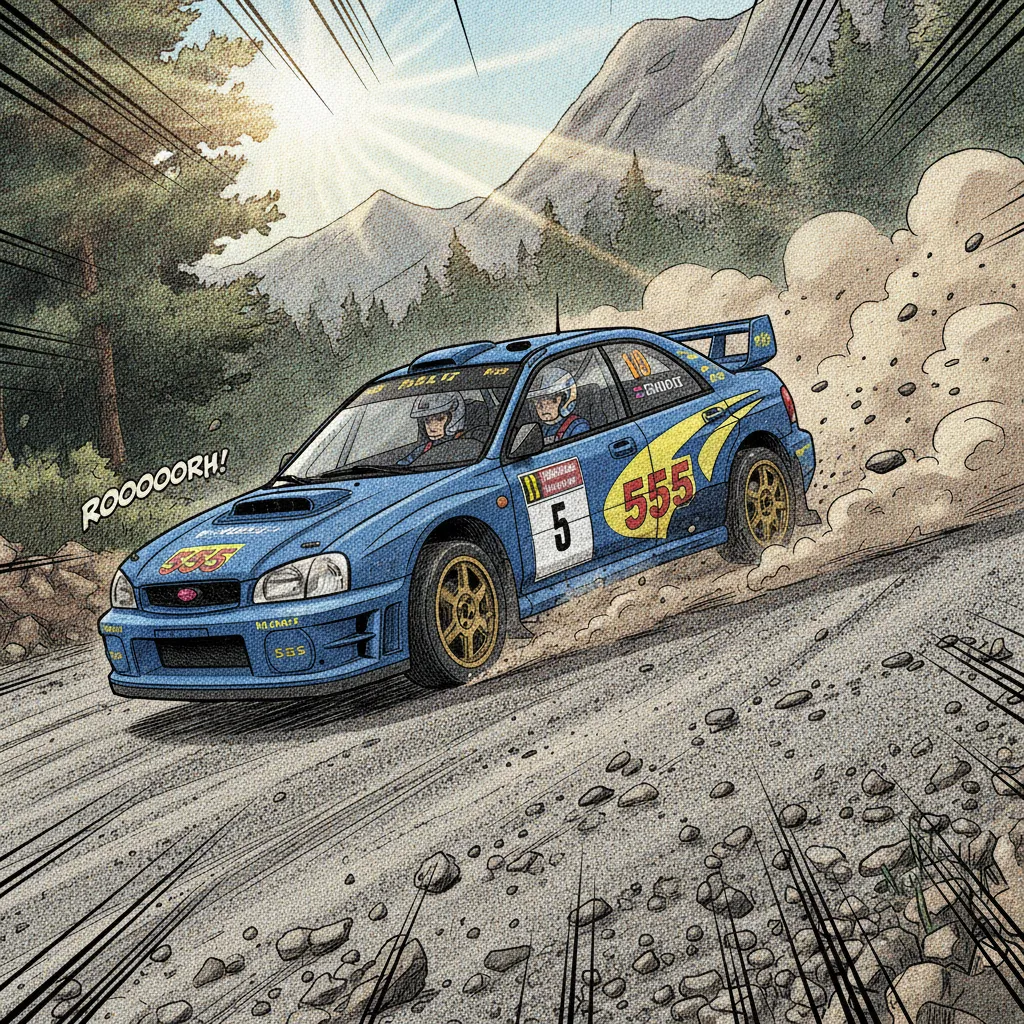
Few technological advancements have sculpted the trajectory of rally sport as profoundly as the advent and subsequent evolution of four-wheel drive (4WD). Before its widespread adoption, two-wheel drive machines, while nimble, often struggled for purchase on loose surfaces, demanding heroic levels of car control to harness limited traction. The game changed irrevocably in the early 1980s with Audi's groundbreaking Quattro, introducing the world to the immense, almost unfair, advantage of driving all four wheels. This wasn't merely an incremental improvement; it was a paradigm shift, redefining grip, acceleration, and ultimately, the very speed at which stages could be attacked.
Early Innovations and Mechanical Mastery
The initial iterations of rally-bred 4WD systems were largely mechanical marvels. Engineers grappled with distributing power effectively between axles without inducing excessive drivetrain stress or 'wind-up.' Early solutions often employed a simple center differential, sometimes with a manual lock or a viscous coupling to manage torque bias. Cars like the Lancia Delta Integrale and Ford Sierra Cosworth 4x4 refined these mechanical principles, demonstrating the robustness and efficacy of purely mechanical systems. The challenge lay in striking the perfect balance between raw traction and dynamic handling – too much lock could induce understeer, while too little could waste power through wheelspin. These systems were heavy, complex to engineer for competition, yet undeniably superior in the treacherous conditions that define rallying.
The Electronic Revolution and Active Control
The 1990s heralded the electronic revolution. With the rise of sophisticated ECUs and sensor technology, mechanical 4WD gave way to active, electronically controlled differential systems. Pioneered and perfected in machines like the Subaru Impreza WRC and Mitsubishi Lancer Evolution, these systems could dynamically vary torque split not just between front and rear axles, but also across the front and rear wheels through active center, front, and rear differentials. Differential Control Units (DCUs) became vital, interpreting driver inputs, throttle position, yaw rate, and wheel speed data to pre-emptively adjust torque distribution, optimising grip, enhancing turn-in, and mitigating oversteer or understeer. This active management transformed rally cars into precision instruments, allowing drivers to exploit every ounce of available traction and fine-tune handling characteristics via programmable maps.
Today's top-tier WRC cars boast highly advanced active differentials, integrating seamlessly with suspension geometry and aerodynamic packages. The quest for fractional gains continues, with engineers constantly refining algorithms to deliver instantaneous torque vectoring, ensuring maximum acceleration and ultimate control across the most diverse and demanding terrains. The journey from a simple mechanical connection to a hyper-intelligent, reactive torque delivery system is a testament to rally engineering's relentless pursuit of performance, making modern 4WD rally cars the pinnacle of dynamic traction management.
Ready to sell? List your rally car or parts for free.
Post an ad