Iconic Rallies & Culture · 2026-10-18
AWD Dominance: Tracing the Technical Evolution of All-Wheel Drive in WRC
From the groundbreaking Audi Quattro to today's electronically sophisticated machines, explore the transformative technical journey of All-Wheel Drive systems that redefined World Rally Championship performance and engineering.
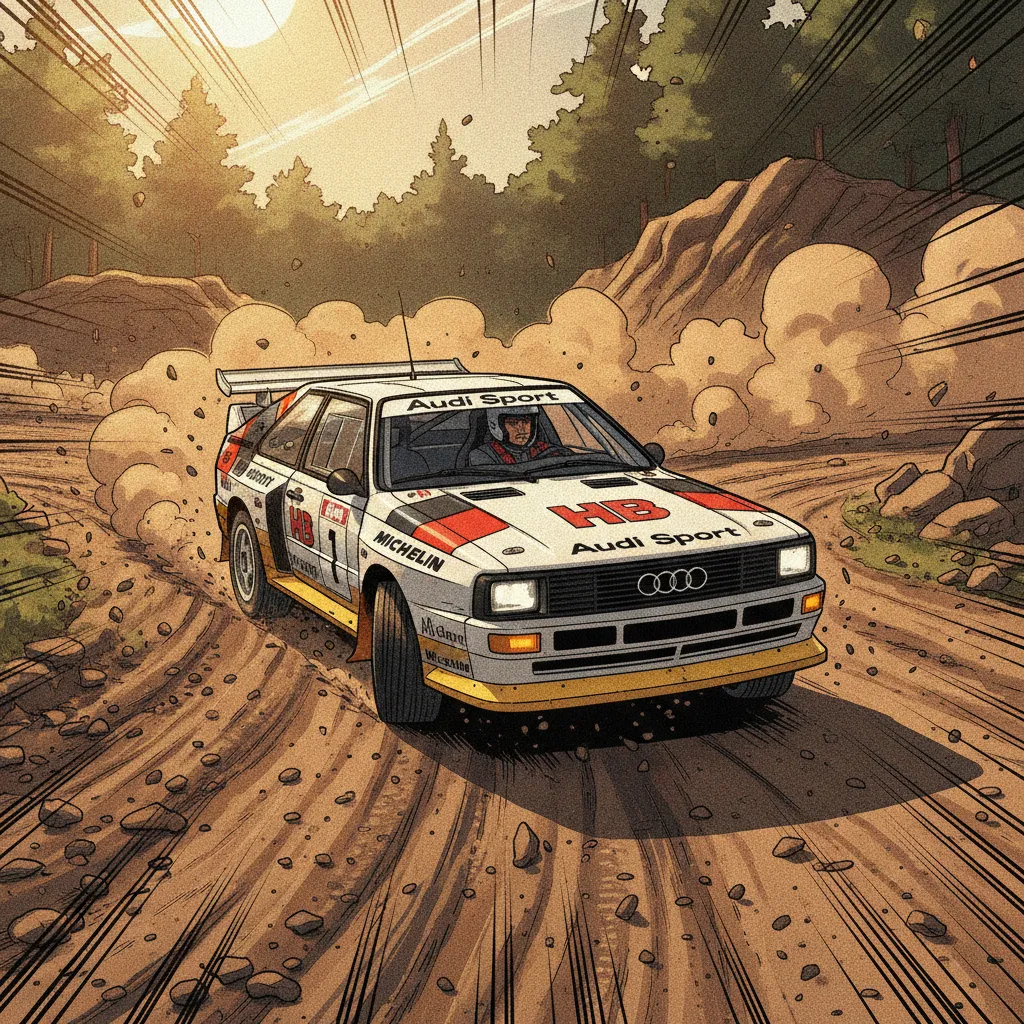
The landscape of the World Rally Championship (WRC) was irrevocably altered in 1981 with the advent of the Audi Quattro. Before its arrival, rear-wheel-drive machines, and occasionally front-wheel-drive variants, reigned supreme. The Quattro's introduction of permanent All-Wheel Drive (AWD) was not merely an advantage; it was a paradigm shift, fundamentally reshaping car design, driving techniques, and the very essence of competitive rallying.
From Mechanical Might to Electronic Mastery
Audi's initial Quattro system, employing a centre differential to distribute power, provided unparalleled traction on loose surfaces – snow, gravel, and mud. While initially heavy and prone to understeer, its raw grip advantage was undeniable, leading to a rapid adoption across the Group B era. This era saw fierce development, with manufacturers experimenting with differential locking mechanisms and more sophisticated centre differentials to manage torque bias. The infamous Lancia Delta S4, for instance, used a complex planetary gear centre differential combined with a viscous coupling, showcasing early attempts at dynamic torque distribution.
The transition to Group A brought further refinement. Cars like the Subaru Impreza WRC and Mitsubishi Lancer Evolution became synonymous with advanced AWD. The development moved beyond purely mechanical solutions to incorporate active differentials, allowing for electronic control over torque distribution. These systems, often hydraulic, could instantaneously vary the locking rates of front, centre, and rear differentials, optimizing traction and handling characteristics across diverse stages. This 'intelligent' torque vectoring dramatically improved agility, reduced understeer, and allowed drivers to carry immense speed through corners, effectively 'steering with the throttle'.
The Digital Age of Traction
Modern WRC regulations continue this legacy of innovation, albeit with a focus on electronic sophistication and hybrid integration. While purely active differentials were restricted in favour of more standardized mechanical limited-slip differentials (LSDs) for a period to control costs and complexity, the underlying principles of optimizing traction remain. Current WRC Rally1 hybrid cars utilize highly advanced electronic engine management and sophisticated chassis dynamics, where the interaction between the combustion engine and electric motor, along with finely tuned mechanical differentials, produces extraordinary levels of grip and control. Engineers meticulously calibrate torque delivery curves and differential ramp angles to exploit every ounce of available friction, making the AWD system a holistic component of the car’s overall performance envelope. The evolution from a brute-force mechanical advantage to a finely-tuned, digitally-orchestrated ballet of power distribution stands as a testament to rally engineering's relentless pursuit of perfection.
Ready to sell? List your rally car or parts for free.
Post an ad