Rally Personalities & Legends · 2026-10-14
Unleashed Power: The Engineering Evolution of Rally Drivetrains
Dive deep into the intricate engineering of rally drivetrains, exploring how these vital components have evolved to deliver power and traction across the world's most challenging stages.
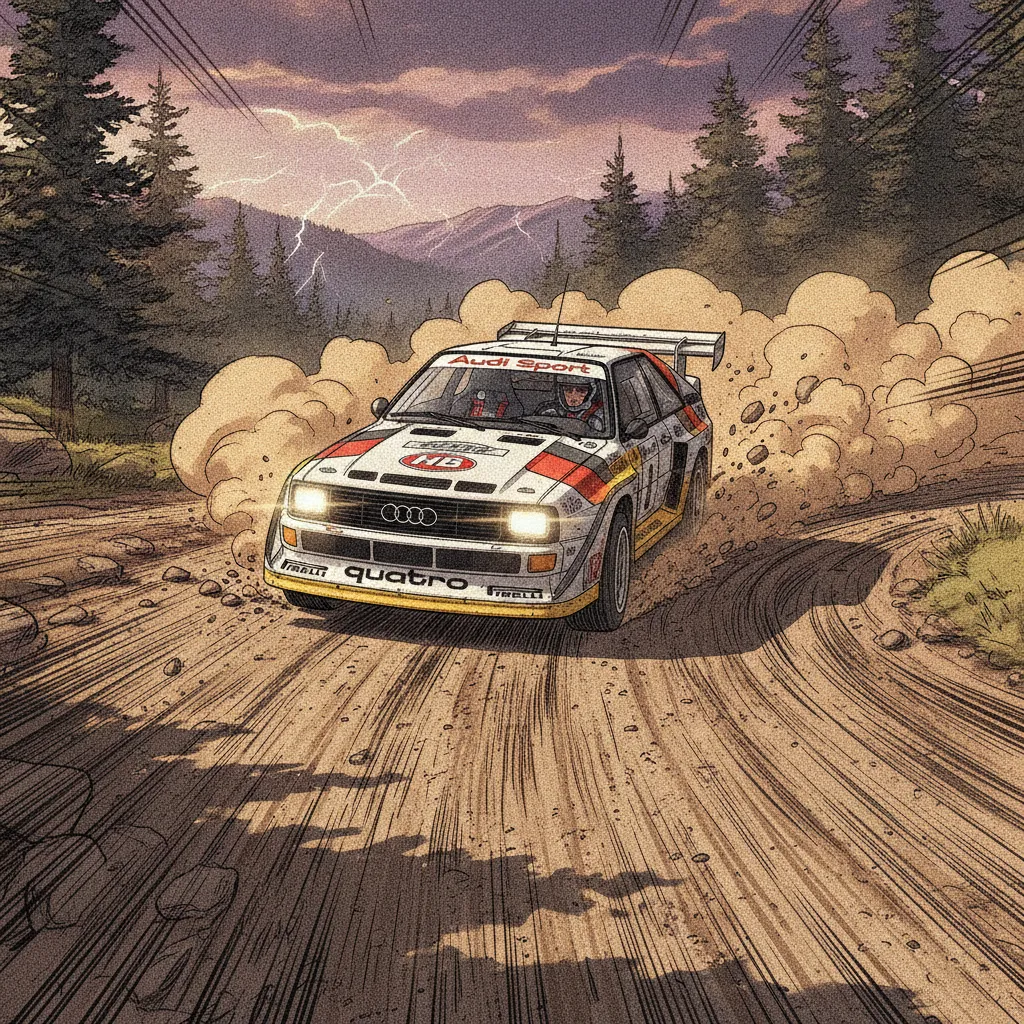
In the visceral world of international rallying, where success hinges on the precise application of power to the ground, the drivetrain stands as an unsung hero. Far from a simple conduit, the rally drivetrain is a marvel of engineering, a complex system meticulously designed to withstand extreme forces, adapt to wildly varying surfaces, and deliver optimal traction when every millisecond counts. Its evolution mirrors the sport's relentless pursuit of speed and reliability, from rudimentary rear-wheel-drive setups to today's highly sophisticated all-wheel-drive systems.
From RWD Purity to AWD Dominance
Early rally machines relied on rear-wheel-drive layouts, demanding immense driver skill to manage oversteer and limited traction. The game-changer arrived with the advent of four-wheel drive, pioneered notably by the Audi Quattro. This paradigm shift was not merely about distributing power to all four wheels; it was about managing torque dynamically. Initial systems utilized mechanical centre differentials, some with manual locking capabilities, to balance power delivery between axles. As the sport progressed into the Group B era, these systems became more complex, employing viscous couplings and, eventually, Torsen differentials to react proactively to traction loss, significantly enhancing stability and grip across gravel, snow, and asphalt.
Modern WRC drivetrains exemplify this pinnacle of development. Today's Rally1 Hybrid cars feature highly sophisticated permanent all-wheel-drive systems, often incorporating mechanical front and rear differentials that can be adjusted externally to fine-tune their locking characteristics. The centre differential, typically a multi-plate clutch type, can be fully open or locked, with its locking maps meticulously programmed by engineers to optimize traction and handling for specific stage conditions. This electronic control, combined with the mechanical prowess, allows for instantaneous torque vectoring, enabling drivers to manipulate the car's attitude mid-corner, either to tighten the line or induce a controlled slide for maximum exit speed.
The Heart of Performance: Gears and Robustness
Beyond the differentials, the rally gearbox is another testament to robust engineering. Sequential manual transmissions, often five or six-speed units, are designed for rapid, clutchless shifts under full throttle, ensuring continuous power delivery. These dog-engagement gearboxes are incredibly strong, built to withstand the jarring impacts and relentless abuse of rally stages, where gear changes are frequent and often violent. Furthermore, the driveshafts and hubs are significantly reinforced to cope with the immense torque, lateral loads, and brutal impacts from jumps and rough terrain. Every component, from the clutch plate to the final drive, is a bespoke, high-performance item, meticulously engineered for durability and efficiency.
The rally drivetrain is a symphony of mechanical and electronic components working in harmony. It's the silent force translating raw engine power into tangible grip, enabling drivers to defy physics and conquer the most challenging landscapes. Its ongoing evolution continues to push the boundaries of motorsport engineering, a critical battleground in the relentless pursuit of rally supremacy.
Ready to sell? List your rally car or parts for free.
Post an ad