Rally Personalities & Legends · 2026-10-12
Group N's Enduring Legacy: The Production Car Powerhouses That Defined Rallying
Dive into the rigorous world of FIA Group N rallying, where production-based machinery pushed the limits of performance within strict homologation rules, shaping careers and captivating fans.
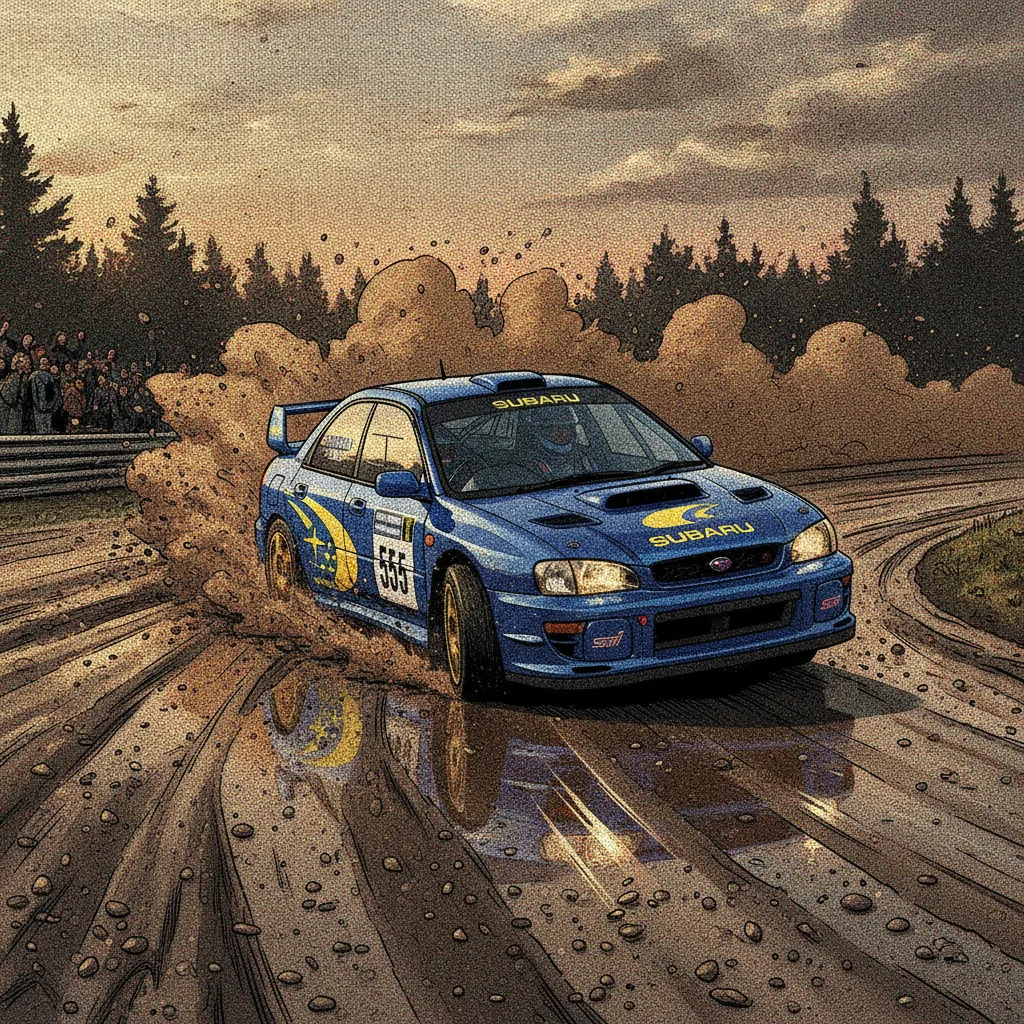
For decades, FIA Group N stood as the bedrock of international rallying, a category celebrated for its raw, production-based machinery and the accessible pathway it offered aspiring talents. While Group B captured headlines with its outrageous power, Group N quietly became the proving ground, demanding precision, mechanical sympathy, and an unparalleled understanding of a car's inherent dynamics. Homologated directly from showroom models, these 'production cars' were permitted only a limited scope of modifications, forcing manufacturers and teams to ingeniously extract performance within a tightly regulated framework.
The Homologation Crucible: Engineering Within Limits
The essence of Group N lay in its strict homologation requirements. Engines had to retain their original block, head, and crankshaft, with modifications largely confined to ancillaries, camshaft profiles, and a mandatory turbo restrictor to equalize power outputs. Transmissions were production-based, though sequential gearboxes eventually made their way into later generations. Crucially, the car’s shell had to remain largely untouched, meaning chassis development focused on strengthening, roll cage integration, and sophisticated suspension setups that could withstand the brutal demands of rally stages. This limited modification window made tyre choice, differential mapping, and suspension tuning paramount, distinguishing the front-runners from the also-rans. It was a true test of engineering ingenuity to maximize what was fundamentally a road car.
Drivers in Group N learned to hustle vehicles that, while potent, lacked the bespoke agility of WRC-spec machinery. This cultivated a driving style emphasizing momentum, line choice, and car control that transferred directly to higher categories. Iconic battles between the Mitsubishi Lancer Evolution and the Subaru Impreza WRX STi defined eras, pushing both marques to continually refine their road-going models to meet the sporting demands. These machines, often campaigned by privateers, were remarkably robust, capable of covering thousands of kilometers of competitive stages with minimal major failures, a testament to their production lineage and the meticulous preparation by dedicated teams.
Today, while the WRC-2 and WRC-3 categories have evolved, the spirit of Group N lives on in their production-based regulations. The legacy of cars like the Impreza and Lancer Evo in Group N reminds us of an era where clever engineering and masterful driving, rather than unlimited budgets, often dictated success. It was a category that championed reliability, accessibility, and pure driving skill, forever etching its place in motorsport history.
Ready to sell? List your rally car or parts for free.
Post an ad