Technical & Engineering Deep-Dives · 2026-10-12
The Untamed Beasts: Group B's Indelible Rallying Legacy
Group B rallying, a brief but explosive era of unrestrained engineering and daring speeds, forever changed motorsport. Its legacy endures through its legendary cars and unparalleled spectacle.
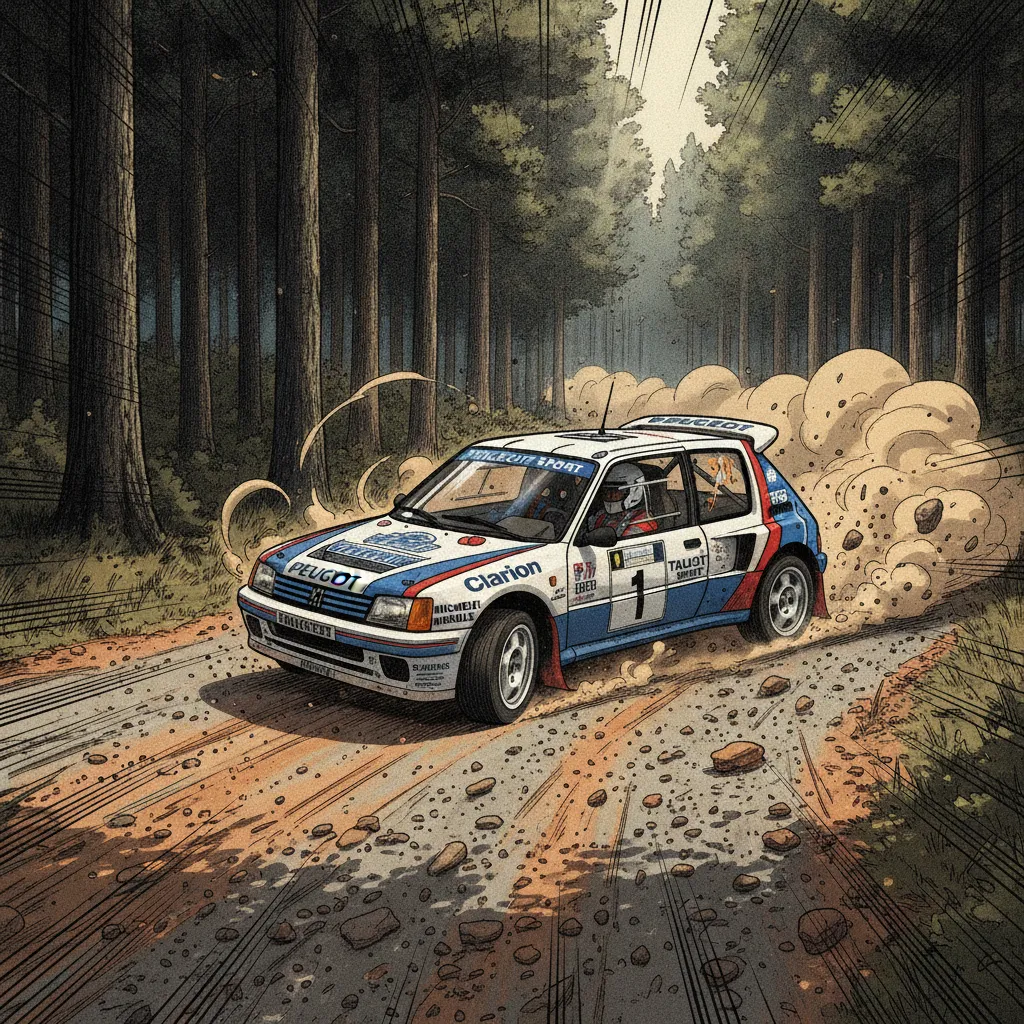
Between 1982 and 1986, the World Rally Championship witnessed an era unlike any before or since: Group B. Born from regulations that allowed unparalleled technical freedom, it became a crucible for some of the most powerful, complex, and ultimately, dangerous rally cars ever conceived. RallyCarsMarket.com delves into the lasting impact of these 'untamed beasts'.
Engineering Extremes and Homologation Heroes
Group B rules demanded only 200 road-going examples for homologation, freeing manufacturers to build purpose-built machines with minimal compromise. The result? Spaceframe chassis, advanced composite bodywork, and monstrously turbocharged engines pushing well over 500 horsepower, all wrapped in lightweight packages often weighing under a tonne. The Peugeot 205 T16, Audi Sport Quattro S1 E2, Lancia 037, and Ford RS200 became household names, each a testament to radical innovation. Technologies like sophisticated four-wheel-drive systems, initially championed by Audi, became ubiquitous, offering unparalleled traction and transforming the very dynamics of stage rallying. Designers pushed boundaries with mid-engine layouts, active aerodynamics (in nascent forms), and twin-charging solutions, creating cars that demanded immense skill and bravery to tame.
However, this unchecked pursuit of speed came at a tragic cost. The sheer pace of the cars, combined with inadequate spectator safety measures, led to a series of devastating accidents. The inherent danger, a cocktail of raw power, minimal driver aids, and human error, ultimately sealed Group B’s fate, leading to its abolition at the end of the 1986 season.
An Enduring Myth and Technological Echo
Despite its abrupt end, Group B's legacy is immense. It birthed legendary cars that continue to command reverence and astronomical values among collectors. More profoundly, it irrevocably shifted the paradigm of rally car design, forcing a focus on sophisticated drivetrain technology and lightweight construction that continues to influence modern WRC machinery. While the raw, untamed power was reined in by subsequent Group A regulations, the spirit of innovation and the pursuit of ultimate performance, tempered by safety, lives on. Group B remains a captivating, albeit bittersweet, chapter in motorsport history, a reminder of what happens when engineering ambition knows almost no bounds.
Ready to sell? List your rally car or parts for free.
Post an ad