Rally Eras & Class Evolution · 2026-10-12
Group B's Aerodynamic Arms Race: Taming Beasts with Fins, Wings, and Science
Dive into the radical aerodynamic evolution of Group B, where engineers transformed raw power into controllable performance through audacious fins, sophisticated wings, and groundbreaking design.
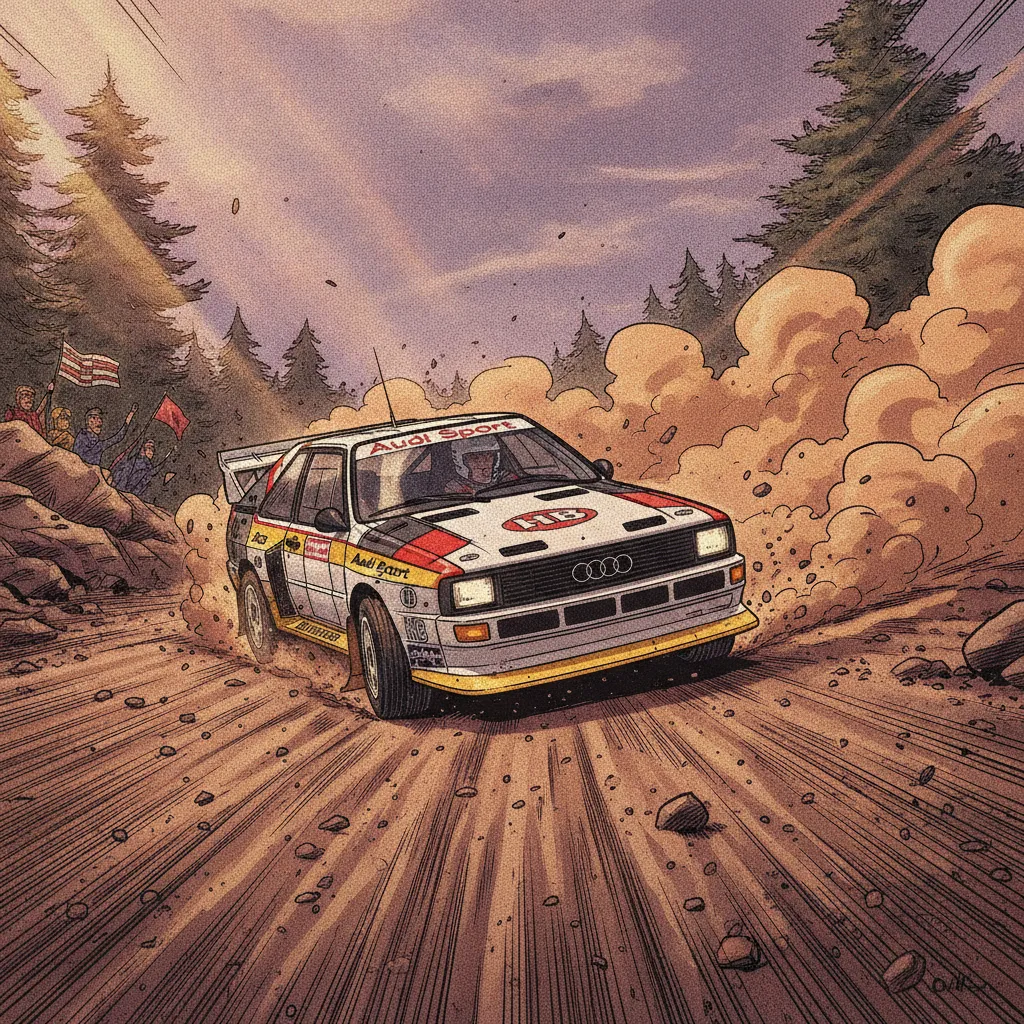
The Group B era of rallying, synonymous with unrestricted power and audacious engineering, was a crucible for technological innovation. While often celebrated for their monstrous engines and all-wheel-drive systems, the evolution of aerodynamic principles was equally pivotal in attempting to tame these fire-breathing beasts. Initially, aero was a rudimentary consideration, primarily focused on high-speed stability. Early Group B contenders, like the iconic Lancia 037 and the nascent Audi Quattro, featured relatively subtle spoilers and modest front air dams – design cues more about managing turbulent air than generating significant downforce.
The Ascent of Aggressive Aero
As engine outputs soared into the 500-600 bhp range, the need for advanced aerodynamic solutions became critical. This sparked an intense 'aero arms race' where engineers pushed the boundaries of what was permissible and practical on a rally stage. The Audi Quattro S1 E2 stands as the most visually arresting testament to this shift. Its colossal rear wing, prominent front splitter, and aggressive side skirts weren't mere aesthetic choices; they were functional elements designed to produce immense downforce, pinning the car to the tarmac or gravel during high-speed sections and complex cornering manoeuvres. The S1 E2’s aero package was a brute-force approach, a stark contrast to the more integrated designs seen on competitors like the Peugeot 205 T16 Evolution 2, which opted for refined bodywork flow and cleverly integrated wing elements to achieve aerodynamic balance.
Lancia’s Delta S4, another Group B legend, showcased a different philosophy, blending aggressive front air intakes and a substantial rear wing with sophisticated underbody treatment designed to manage airflow and optimize cooling – a critical, often overlooked, aspect of aero. The challenge lay in creating a package that worked across diverse surfaces and speeds, from flat-out forest straights to technical, low-speed hairpins, without incurring excessive drag. Lightweight composite materials became commonplace, allowing for larger, more complex aero components without a prohibitive weight penalty.
Ultimately, Group B's short-lived but explosive aerodynamic development laid crucial groundwork for future generations of rally and circuit racing cars. The lessons learned, often through spectacular trial and error, regarding downforce generation, drag reduction, and high-speed stability, undeniably influenced the computational fluid dynamics (CFD) and wind tunnel testing that would become standard in motorsport. The radical fins and wings of Group B remain iconic, representing a truly fearless era where engineering genius met raw, untamed power head-on.
Ready to sell? List your rally car or parts for free.
Post an ad