Rally Personalities & Legends · 2026-10-12
Group A's Unbreakable Spirit: A Legacy Cast in Steel and Grit
Explore the profound and lasting impact of Group A rally cars, the machines that rebuilt the sport after Group B, blending production roots with fierce competition.
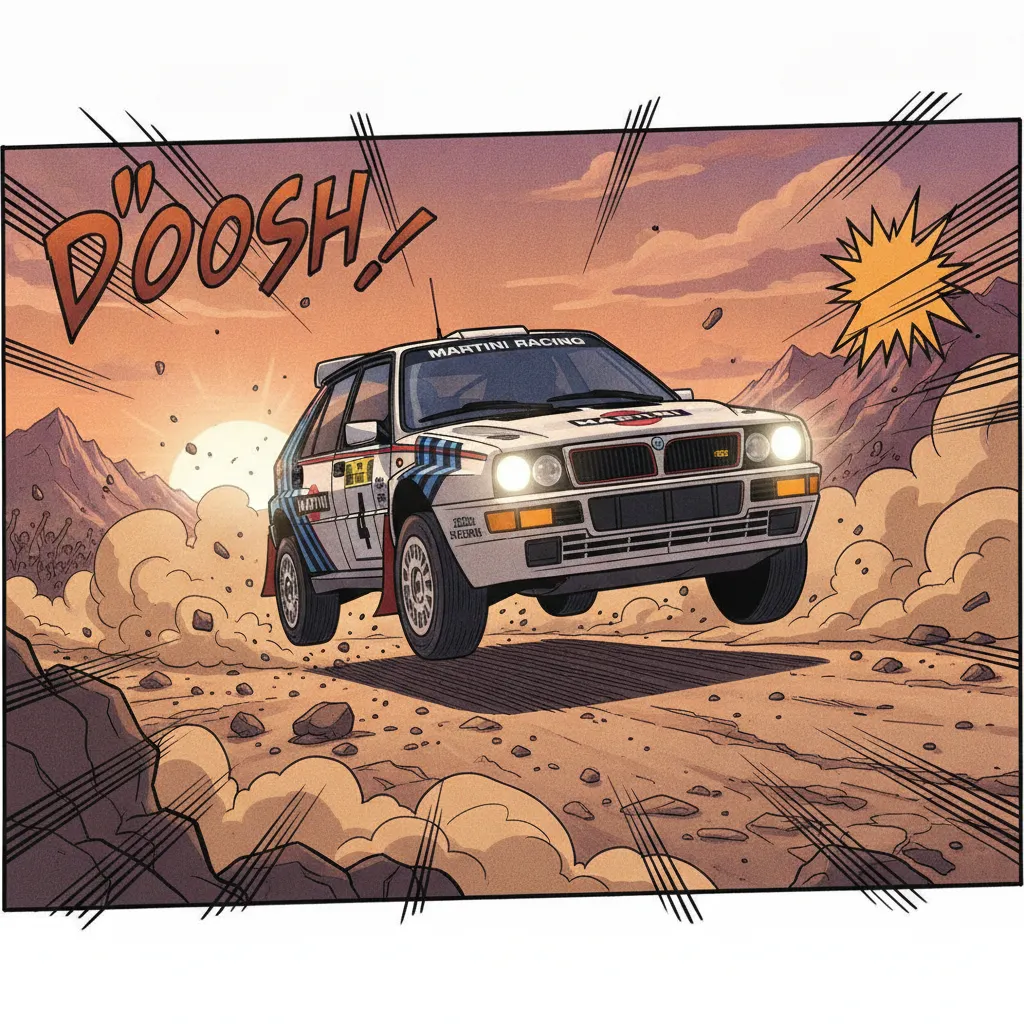
Following the spectacular but ultimately tragic demise of Group B, the World Rally Championship found its footing in 1987 with the advent of Group A. This regulatory shift wasn't merely an evolutionary step; it was a redefinition, anchoring the sport to more production-based machinery while retaining its electrifying competitive spirit. Group A demanded that manufacturers build a minimum number of road cars for homologation, ensuring a more direct lineage from showroom to special stage.
Engineering under Constraint: Group A's Technical Blueprint
Unlike the no-holds-barred approach of Group B, Group A imposed stringent technical constraints that forced engineers to innovate within tight parameters. Engines, typically four-cylinder turbocharged units, were subject to a 33mm turbo restrictor, balancing outright power with reliability. Drivetrains evolved significantly, with advanced all-wheel-drive systems, often incorporating mechanical or viscous centre differentials, becoming the norm. While early Group A cars retained H-pattern gearboxes, later iterations saw the introduction of more robust sequential dogbox transmissions, allowing for lightning-fast, clutchless shifts.
Suspension development was paramount. Manufacturers like Lancia, Toyota, Subaru, and Mitsubishi poured resources into optimising damper settings and geometry for punishing terrain. This focus meant that while the shell might be production-derived, what lay beneath was pure motorsport engineering, fine-tuned in the service park by dedicated teams. Anti-lag systems (ALS) became increasingly sophisticated, ensuring immediate throttle response out of slow corners, even with the restrictor limiting boost.
The Icons and Their Indelible Mark
The Group A era spawned some of rally's most beloved and successful cars: the indomitable Lancia Delta Integrale, the resilient Toyota Celica GT-Four, and the legendary Subaru Impreza WRC and Mitsubishi Lancer Evolution series. These machines, piloted by titans like Juha Kankkunen, Carlos Sainz, and Colin McRae, showcased immense durability and astonishing performance. Their battles on gravel, tarmac, and snow captivated audiences globally and forged enduring rivalries.
The legacy of Group A extends far beyond nostalgic memories. It demonstrated that world-class rallying could thrive on a foundation of accessible, road-relevant technology. The principles of efficient engineering under homologation rules, the relentless pursuit of reliability, and the sheer talent required to master these machines laid the groundwork for the modern WRC, influencing categories like Rally2 and even shaping our understanding of performance car development. Group A didn't just rebuild rally; it gave it a new, sustainable, and utterly captivating identity.
Ready to sell? List your rally car or parts for free.
Post an ad