Baltic & Regional Heritage · 2026-10-13
Revolutionising Grip: The Unstoppable Ascent of Four-Wheel Drive in Rallying
Delve into the engineering marvel that transformed rally motorsport: the four-wheel-drive system. From its controversial inception to its absolute dominance, we explore the technical advancements that cemented 4WD as the indispensable backbone of modern rally car performance.
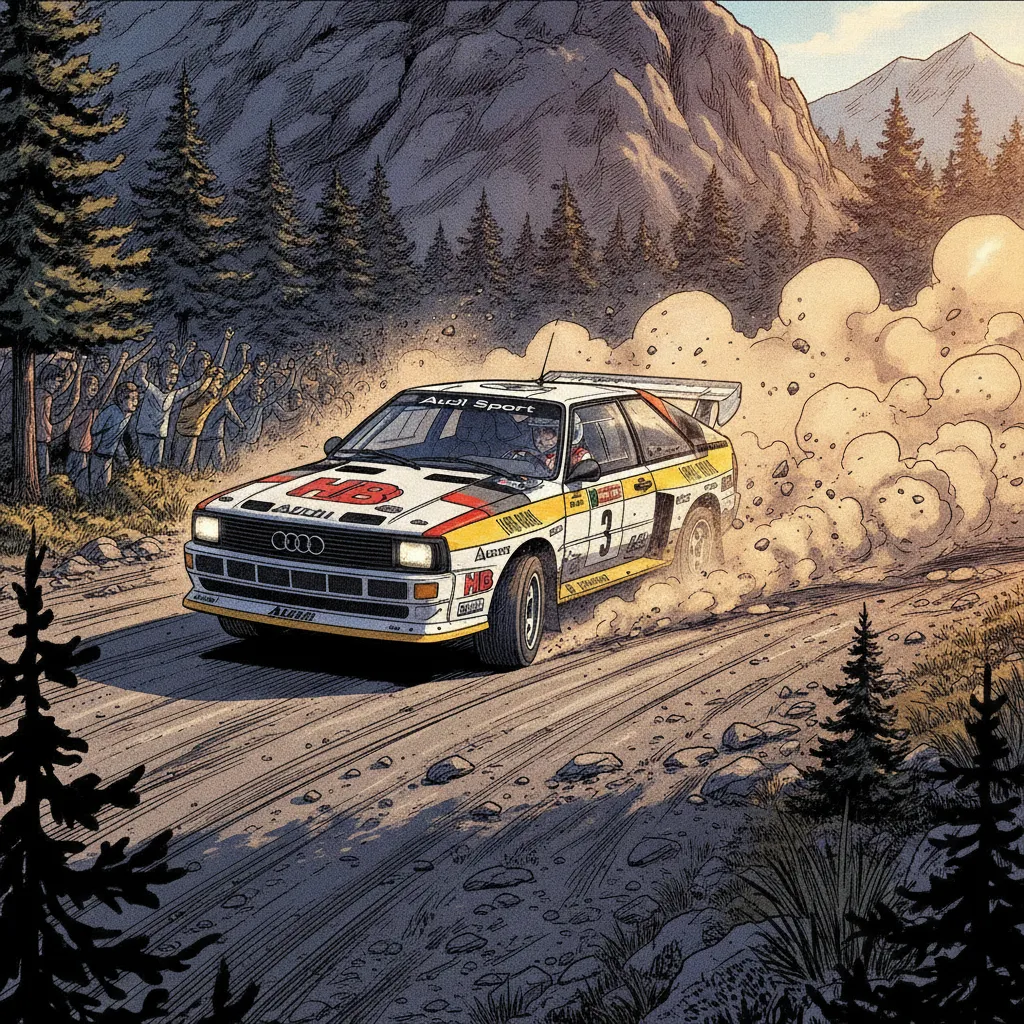
Before the late 1970s, rally cars were predominantly rear-wheel drive, often struggling for traction on the myriad loose surfaces that define the sport. The game-changer arrived in 1980, heralded by the Audi Quattro, a machine that didn't just compete – it fundamentally redefined what was technically possible. Its revolutionary permanent four-wheel-drive system, initially met with scepticism and even attempts at prohibition, quickly proved an unassailable advantage. This wasn't merely about putting power to all four wheels; it was about optimising traction, stability, and control across gravel, snow, and even tarmac.
The Technical Edge of All-Wheel Traction
The brilliance of the early Quattro lay in its ability to distribute engine torque to all four wheels simultaneously, dramatically increasing available grip for acceleration and cornering. While early systems were relatively simple, featuring a mechanical centre differential, they immediately offered superior launch control and immense stability through adverse conditions. This innovation allowed drivers to apply power earlier and more aggressively out of corners, significantly reducing stage times. The inherent mechanical grip mitigated the frantic wheelspin often seen in 2WD machines, leading to more composed and ultimately faster driving.
The Group B era, a crucible of motorsport innovation, cemented 4WD’s dominance. Manufacturers like Peugeot with their 205 T16 and Lancia with the Delta S4 adopted sophisticated 4WD systems, pushing power outputs to stratospheric levels, confident the four contact patches could translate it into forward momentum. As the sport evolved into the WRC era, 4WD systems grew exponentially more complex. Modern rally cars utilise highly advanced electronic control units (ECUs) to manage active centre, front, and rear differentials, allowing for dynamic torque vectoring. This precision engineering permits real-time adjustments to power distribution, optimising traction and stability for every millisecond of a stage, battling understeer and oversteer with incredible efficacy.
Today, 4WD is not just an advantage; it is a prerequisite, woven into the very fabric of competitive rallying. From the intricate mechanical setups of yesteryear to the electronically managed masterpieces of the present, the evolution of four-wheel drive in rallying represents a relentless pursuit of grip, a testament to engineering ingenuity that continues to push the boundaries of performance on the world's most challenging stages.
Ready to sell? List your rally car or parts for free.
Post an ad