Baltic & Regional Heritage · 2026-11-25
The Rise of Group B Rallying: Engineering Extremes and the Quest for Unfettered Power
Explore the legendary Group B rally era, a period of unparalleled engineering freedom. Manufacturers crafted purpose-built machines pushing the boundaries of power, aerodynamics, and AWD technology, redefining rally performance.
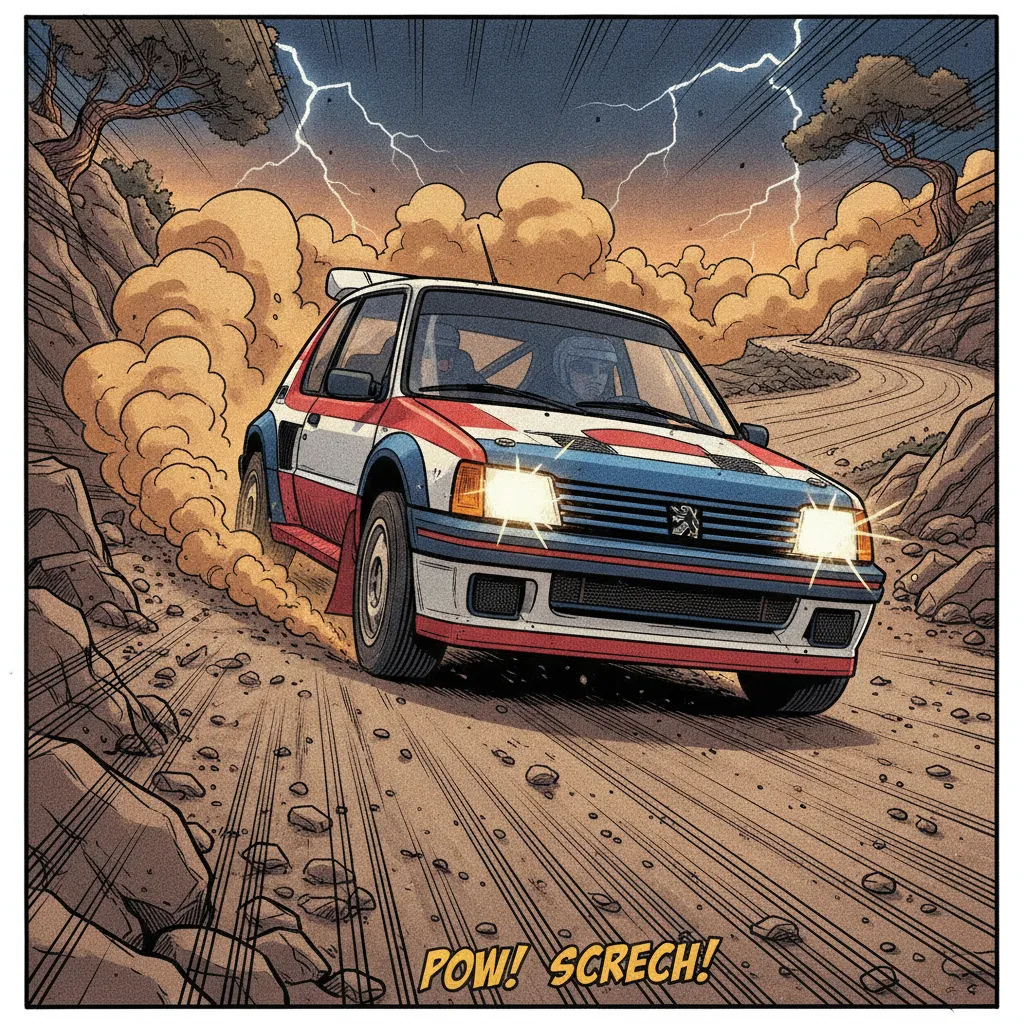
The Group B era of the World Rally Championship (WRC), spanning from 1982 to 1986, remains an unparalleled chapter in motorsport history, a wild west of engineering innovation and audacious power. Born from a relatively liberal rulebook, manufacturers were granted extraordinary freedom, leading to the creation of bespoke rally weapons that redefined the very limits of automotive performance and driver courage.
At its core, Group B was a pursuit of unfettered power. Homologation requirements were a mere 200 road cars, a figure low enough to justify purpose-built chassis rather than road-car derivatives. This allowed engineers to unleash their imaginations. Engines, often turbocharged or supercharged, were pushed to astonishing outputs, with some cars reportedly exceeding 500 horsepower in a chassis weighing under 1,000 kilograms. The power-to-weight ratios were, and remain, staggering, transforming these machines into ballistic missiles on gravel, tarmac, and snow.
Aerodynamic Dominance and Traction Control
Beyond brute force, Group B witnessed a parallel arms race in chassis dynamics and aerodynamics. Early contenders like the Lancia 037 showcased ingenious rear-wheel-drive solutions, often supercharged for instantaneous throttle response. However, the paradigm shifted with the advent of all-wheel-drive (AWD) technology, famously pioneered by Audi with its Quattro. This innovation delivered unparalleled traction, translating raw engine output into forward momentum with brutal efficiency. Soon, mid-engine, AWD layouts became the gold standard, exemplified by machines like the Peugeot 205 T16 and Lancia Delta S4. These cars featured sophisticated suspension geometry, advanced limited-slip differentials, and rudimentary yet effective forms of traction control and anti-lag systems, all pushing the envelope of vehicle dynamics. Aggressive aero packages, featuring prominent wings, spoilers, and front splitters, were not just for show; they were critical in managing high-speed stability and generating crucial downforce on blisteringly fast stages.
The legacy of Group B is complex. While its brief existence captivated millions and pushed automotive engineering to its zenith, the inherent dangers associated with such extreme performance eventually led to its tragic demise. Yet, the lessons learned in materials science, engine management, forced induction, and all-wheel-drive systems continue to influence motorsport and road car development to this day. Group B cars were more than just rally machines; they were pure expressions of engineering ambition, legendary homologation specials etched permanently into the annals of motorsport folklore.
Searching to buy:
See all listings
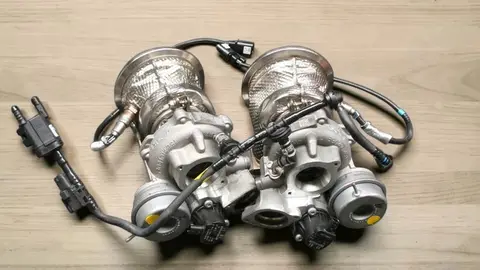
Turbos & forced induction
Audi RS4 B9 / RS5 F5 2.9 TFSI Bi-Turbocharger Set – Left & Right (06M145703D / 06M145704D) – 0 km / NEW
- Audi
- New
Want to sell yours? Listing a rally car or parts is free.
Post your Ad