Baltic & Regional Heritage · 2026-10-22
The Unforgettable Reign of Group B Rallying: A Technical Retrospective
Group B remains an unparalleled chapter in motorsport history, where engineering audacity met brutal power, crafting machines that pushed the boundaries of speed and spectator thrill.
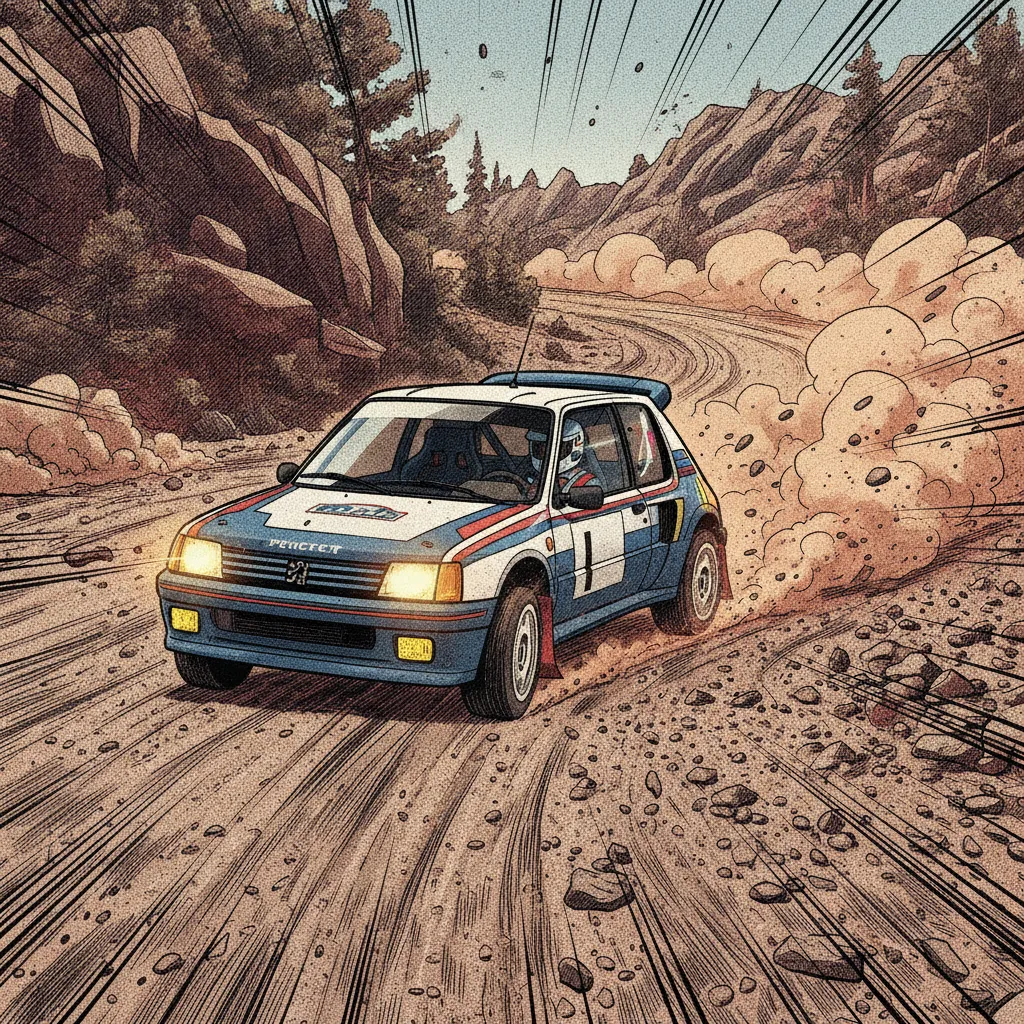
The siren call of Group B rallying still echoes through the canyons of motorsport history, a period from 1982 to 1986 when homologation rules unleashed an arms race of engineering audacity. This was not merely racing; it was an era defined by extreme power-to-weight ratios, sophisticated drivetrain mechanics, and a raw, untamed spectacle that captivated millions and set new benchmarks for rally car development.
Engineering Marvels: Beyond the Blueprint
At its core, Group B homologation required only 200 road-going versions of a specific model for entry, a figure easily bypassed by manufacturers eager to exploit the regulations. This led to purpose-built, spaceframe chassis designs cloaked in lightweight composite body panels, often featuring mid-mounted engines for optimal weight distribution. Forced induction became ubiquitous, with turbochargers coercing immense power from relatively small displacement engines. The Audi Quattro S1 E2, for instance, famously deployed its five-cylinder, 20-valve engine with an anti-lag system that delivered a staggering 500+ horsepower, propelling the car from 0 to 100 km/h in under three seconds on gravel. Similarly, the Peugeot 205 T16, with its transverse mid-mounted turbo-four and permanent all-wheel drive, demonstrated unparalleled agility and traction, quickly dominating the championship.
These machines were laboratories on wheels, experimenting with groundbreaking technologies like integrated roll cages, advanced suspension geometries, and increasingly complex differential systems. The rivalry between two-wheel drive powerhouses, exemplified by the supercharged Lancia 037, and the emerging all-wheel drive supremacy underscored the diverse technical approaches within the category. Yet, this relentless pursuit of speed, coupled with minimal spectator safety measures, ultimately led to the category's abrupt and tragic demise. Group B cars, with their explosive performance and limited electronic aids, demanded supreme skill and bravery from their drivers, producing a level of spectacle never to be replicated.
Today, Group B cars are revered as the pinnacle of rally engineering, a testament to an era when regulations fostered radical innovation rather than stifling it. Their legacy continues to influence modern rally car design, reminding us of the audacious spirit that once defined the fastest, most powerful rally machines ever built.
Ready to sell? List your rally car or parts for free.
Post an ad