Rally Personalities & Legends · 2026-10-25
The Untamed Beast: Group B's Enduring Legacy of Power and Spectacle
The mid-1980s saw the Group B era redefine rally, unleashing vehicles of unparalleled power and technical audacity. Though short-lived, its impact on motorsport, from advanced AWD to forced induction, remains profound, captivating enthusiasts globally.
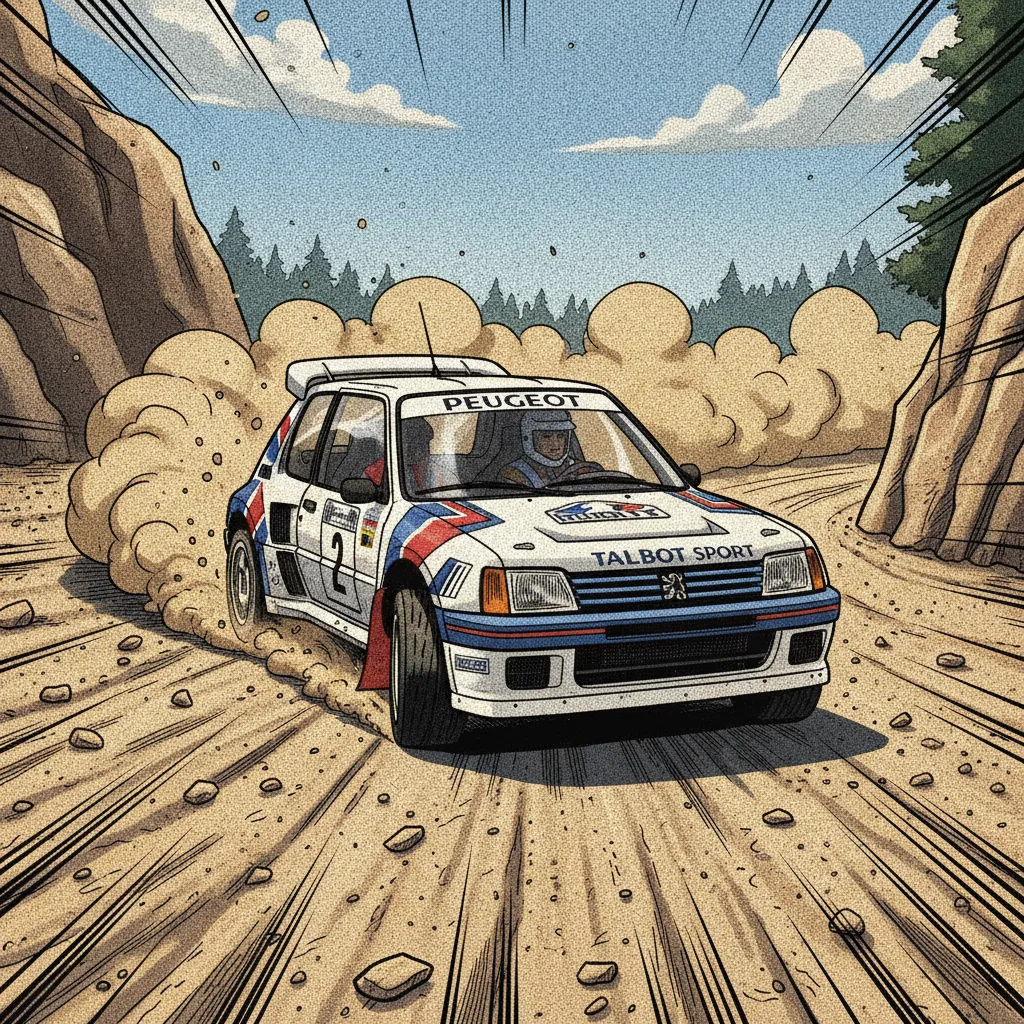
The mid-1980s witnessed an unparalleled epoch in rallying: the Group B era. A brief, incandescent flame in motorsport history, Group B liberated engineers to craft the most extreme rally machines ever conceived. Forged in an age of daring innovation and scant regulation, these homologation specials redefined the boundaries of speed, power, and spectacle, leaving an indelible mark on the sport that reverberates to this day.
Engineering Freedom: The Heart of Group B
What set Group B apart was its audacious technical freedom. Manufacturers like Audi, Peugeot, Lancia, and Ford poured resources into developing bespoke weapons. Homologation rules, requiring only 200 road-going examples, were a mere formality, permitting purpose-built mid-engine, four-wheel-drive monsters. Power outputs soared, with turbocharged engines routinely exceeding 500 bhp, and some rumored to touch 600 bhp, all in vehicles weighing under a metric tonne. Advanced composites, sophisticated suspension geometry, and increasingly complex aerodynamic packages were not just innovations; they were necessities for taming these ballistic machines on treacherous gravel, tarmac, and snow.
The Peugeot 205 T16, for instance, a mid-engined, transverse-mounted marvel, combined a potent 1.8-litre turbocharged engine with permanent four-wheel drive, dominating the World Rally Championship with its exceptional balance and traction. Its direct rival, the Lancia Delta S4, pushed boundaries further with a twin-charged (supercharger and turbocharger) setup, mitigating turbo lag and delivering explosive, linear power delivery unmatched at the time.
The Unforgettable Spectacle and its Tragic End
The allure of Group B was undeniable. Crowds flocked in unprecedented numbers, lining stages often mere feet from the action, creating an electrifying, almost gladiatorial atmosphere. The sight and sound of these flame-spitting, gravel-flinging beasts, piloted by rally titans, became legendary. However, this intoxicating blend of raw power and unrestricted speed on public roads carried inherent risks. The escalating pace, coupled with insufficient safety measures for both competitors and spectators, led to a series of tragic accidents.
In 1986, after multiple fatalities, motorsport's governing body, FISA, controversially but decisively, banned Group B for the 1987 season. The decision sent shockwaves through the rallying world, bringing an abrupt end to what many consider its most thrilling, yet dangerous, chapter.
Shaping the Future of Rallying
Despite its abrupt cessation, Group B's legacy is profound. Its innovations, particularly in all-wheel drive and forced induction technologies, became cornerstones for subsequent rally car development. The extreme designs, the relentless pursuit of speed, and the sheer audacity of the era continue to captivate enthusiasts globally. Group B cars remain motorsport icons, cherished for their brute force, technical ingenuity, and the unforgettable spectacle they provided. They were, and still are, the untamed beasts of rally – a golden age etched forever in the annals of speed.
Ready to sell? List your rally car or parts for free.
Post an ad