Legendary Cars & Engineering · 2026-11-22
The Apex Predators: Unpacking the Extreme Engineering of Group B Rally
Dive into the audacious engineering that defined Group B rally cars, where unrestricted innovation birthed fire-breathing homologation specials pushing the absolute limits of speed and technology. These legends remain benchmarks of motorsport design.
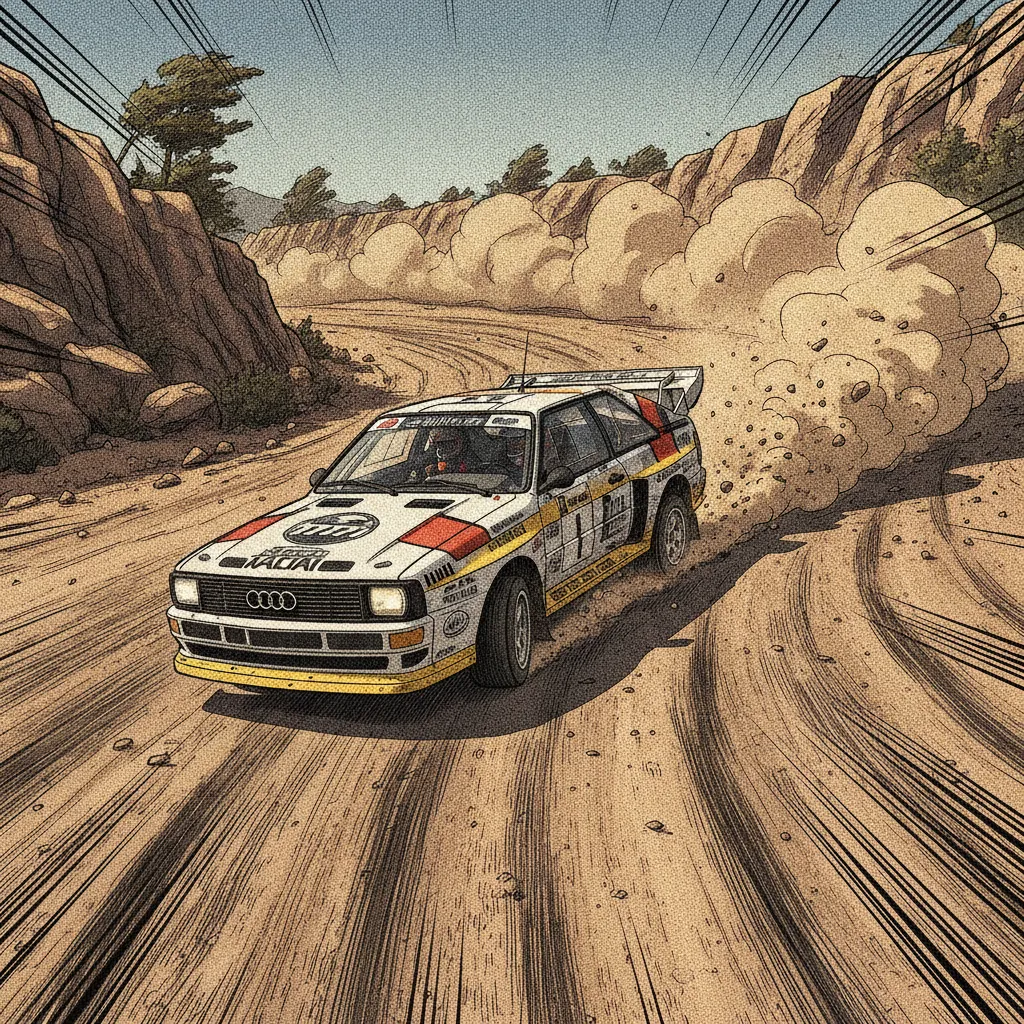
The echoes of turbocharged flat-out runs and the roar of uncorked exhausts still resonate for any true rally aficionado. Group B, spanning a glorious yet tragically brief era from 1982 to 1986, wasn't just a category; it was a no-holds-barred engineering crucible. Manufacturers, granted immense homologation freedom, unleashed an unparalleled wave of innovation, birthing machines that pushed the boundaries of automotive performance and driver courage to their absolute zenith.
The Powerhouse Within: Turbocharged Giants
At the heart of every Group B behemoth lay a forced-induction monster. While naturally aspirated engines existed, the turbocharged revolution defined the era. Power outputs rapidly escalated from modest beginnings to mind-boggling figures exceeding 500-600 horsepower, sometimes rumoured to touch 800hp in qualifying trim. Engines like the Audi's pioneering five-cylinder turbo, or the Peugeot 205 T16's mid-mounted inline-four, were not merely powerful; they were engineering marvels designed for explosive torque delivery and brutal acceleration. Coupled with sophisticated anti-lag systems, throttle response was immediate, turning stages into a series of power slides and wheelspin.
Chassis Dynamics and Aerodynamic Audacity
Beyond raw power, Group B engineering shone in chassis development. Bespoke spaceframe constructions, often utilising lightweight composite materials like Kevlar and carbon fibre, provided immense rigidity while keeping overall weight perilously low – some cars tipped the scales at just 900-1000kg. Suspension systems were highly advanced, featuring massive travel and intricate damping to cope with the brutal, unforgiving terrain of rally stages. Aerodynamics, once an afterthought in rally, became a critical performance differentiator. The Audi Quattro S1 E2, with its colossal front splitter and towering rear wing, was a prime example of designers chasing downforce and stability with audacious, almost brutalist, efficiency, making these cars look like prototypes straight from a sci-fi epic.
Homologation Legends and Enduring Legacy
The beauty and danger of Group B stemmed from its homologation requirements: a mere 200 road-going examples and 20 Evolution versions. This minimal barrier unleashed an arms race of engineering prowess, allowing rally departments to essentially build bespoke race cars from the ground up, rather than modifying production vehicles. The result was a generation of 'homologation specials' – vehicles like the Lancia 037, Ford RS200, MG Metro 6R4, and the dominant Peugeot 205 T16 and Audi Quattro S1 – that remain benchmarks of extreme motorsport design. Though their reign was short-lived, ended by concerns over safety, the engineering lessons learned, particularly in all-wheel drive and lightweight construction, irrevocably shaped the future of rallying and performance road cars. Group B cars weren't just fast; they were a pure, unadulterated expression of engineering ambition, forever etched in the annals of motorsport history.
Searching to buy:
See all listings
Want to sell yours? Listing a rally car or parts is free.
Post your Ad