Legendary Cars & Engineering · 2026-11-19
The Algorithmic Grip: A Deep Dive into WRC's Active Differential Revolution
Unpack the technical genius behind active differentials in WRC, exploring how these sophisticated systems redefined grip and handling for rally's elite machinery.
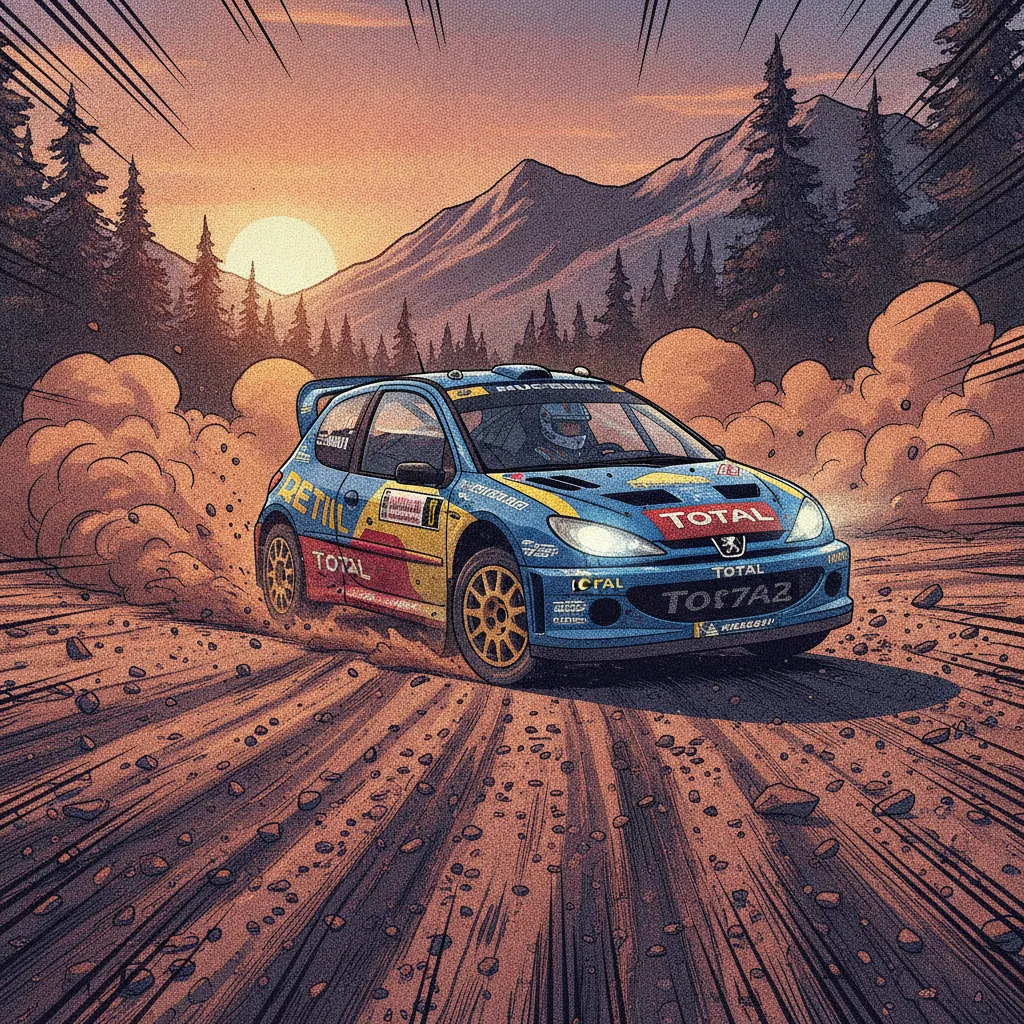
In the relentless pursuit of ultimate traction and handling precision, few innovations have reshaped World Rally Championship (WRC) vehicle dynamics as profoundly as the active differential. Far more sophisticated than their passive limited-slip counterparts, active differentials introduced an era where a rally car's torque distribution could be dynamically optimized, turn by turn, surface by surface, empowering drivers with unprecedented control and speed.
The Dawn of Dynamic Torque Management
The genesis of active differentials in WRC marked a pivotal shift from purely mechanical solutions to sophisticated electro-hydraulic systems. Unlike traditional differentials that react to wheel slippage, active units proactively manage torque split and locking rates based on real-time data from myriad sensors – wheel speed, steering angle, throttle position, braking pressure, and yaw rate. An intricate Electronic Control Unit (ECU) processes this data, commanding hydraulic actuators to vary the differential's locking force, effectively vectoring torque to the wheels with maximum grip or to aid in rotational dynamics.
This technological leap, prominently featured in iconic machines like the Peugeot 206 WRC and the Subaru Impreza WRC from the early 2000s, transformed rally driving. Drivers could exploit previously unimaginable levels of traction on diverse surfaces – from loose gravel and slick tarmac to snow and ice. The ability to precisely tune the front, central, and rear differentials allowed engineers to craft bespoke maps for each stage, optimizing turn-in aggression, mid-corner stability, and blistering corner-exit acceleration. A carefully calibrated active central differential, for instance, could provide a virtual pivot point for aggressive changes in direction, while rear differentials ensured power was delivered efficiently without inducing excessive oversteer.
Engineering Grip: Beyond the Mechanical Limit
The impact of active differentials extended beyond raw speed; they refined the very art of rally car setup. Engineers spent countless hours perfecting algorithms, predicting vehicle behavior and driver input to ensure seamless torque transition. This allowed rally cars to maintain optimal slip angles, mitigating understeer on entry and maximizing drive out of corners. While modern WRC regulations have simplified certain aspects, moving away from fully active front and rear differentials in favor of passive mechanical units with an active central differential, the foundational principles established by these trailblazing systems continue to influence contemporary vehicle dynamics.
Ultimately, the active differential stands as a testament to rally engineering's relentless push for perfection. It’s a complex ballet of electronics, hydraulics, and mechanical ingenuity, granting rally weapons the algorithmic grip necessary to conquer the world’s most demanding stages, forever altering the landscape of WRC competition.
Ready to sell? List your rally car or parts for free.
Post an ad