Baltic & Regional Heritage · 2026-11-10
The Unseen Revolution: How All-Wheel Drive Redefined Rallying Dynamics
Explore the profound impact of all-wheel drive on rally sport, from Audi's pioneering Quattro to modern active differential systems, fundamentally reshaping vehicle dynamics and engineering paradigms.
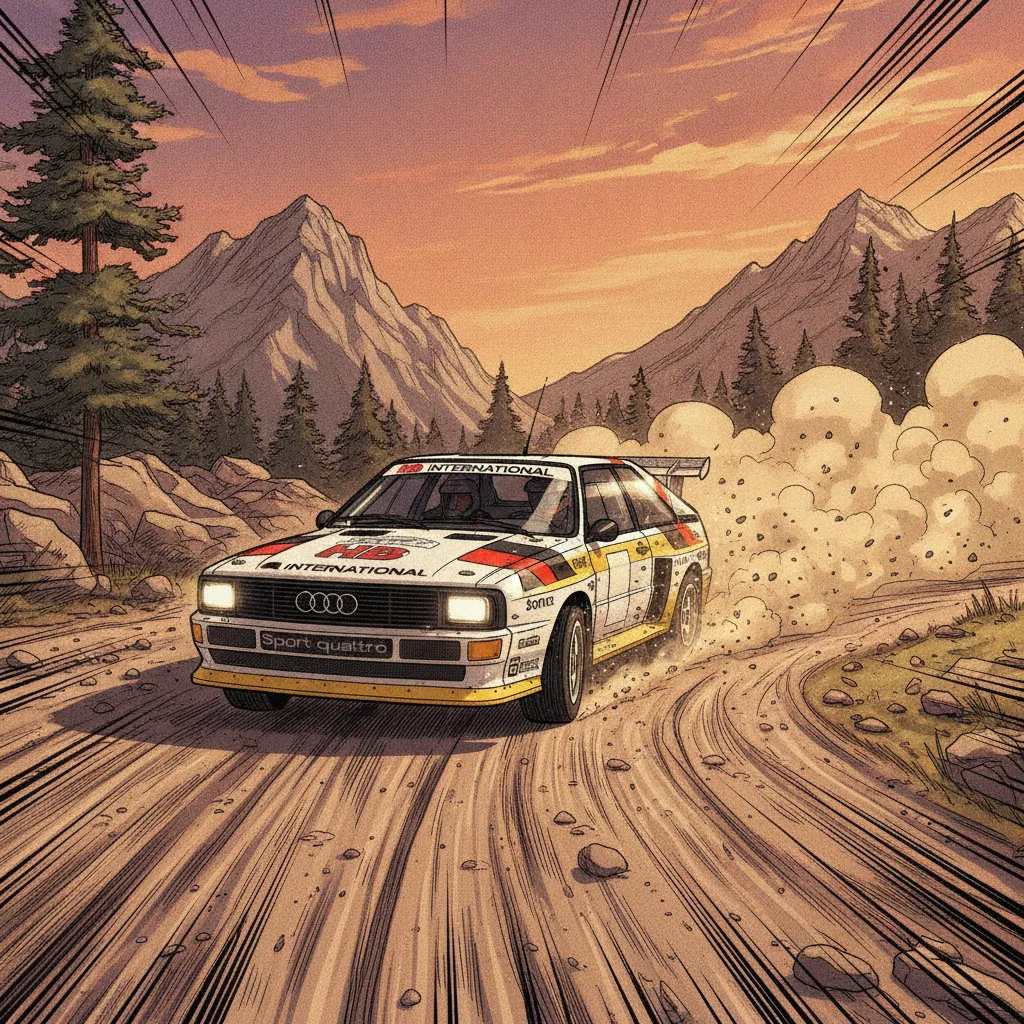
The introduction of all-wheel drive (AWD) profoundly reshaped rally sport, moving beyond the limitations of two-wheel drive to unlock unprecedented levels of traction and control. Before AWD, the physics of transferring power efficiently to the ground on varied, low-grip surfaces presented a constant engineering dilemma. The seminal arrival of AWD systems marked a paradigm shift, forever altering vehicle dynamics and driver approach, and fundamentally redefining what was possible on a rally stage.
The Quattro Revolution and Early Systems
The true AWD revolution began in the early 1980s, epitomized by the Audi Quattro. Its permanent four-wheel drive system, initially with a centre differential and later evolving with mechanical or viscous limited-slip differentials, proved devastatingly effective. This configuration allowed torque to be distributed to all four wheels, significantly improving grip during acceleration, braking, and especially cornering on gravel, snow, and wet tarmac. The immediate competitive advantage was undeniable, forcing rivals to rapidly develop their own AWD platforms, leading to the legendary Group B era where AWD became the standard.
Advanced Differential Technologies
Early AWD systems often utilized relatively simple viscous or mechanical locking differentials, primarily aimed at achieving consistent power delivery. As the sport progressed, so did the sophistication of these systems. Electronic control units (ECUs) began to manage active differentials, capable of dynamically adjusting torque split not just between axles but also across individual wheels. This sophisticated management allowed engineers to fine-tune handling characteristics, optimize power delivery out of corners, and precisely mitigate understeer or oversteer. Modern WRC machinery, for instance, employs highly complex hydraulic differentials – front, centre, and rear – providing granular control over slip and traction, crucial for extracting millisecond gains on the knife-edge of performance.
Impact on Driving Dynamics and Engineering
The advent of AWD demanded a new breed of rally driver, one who could master techniques to exploit the additional grip while seamlessly managing the increased weight and complexity inherent in such systems. For motorsport engineers, it opened vast new frontiers in chassis dynamics, suspension tuning, and powertrain integration. The relentless pursuit of superior traction, stability, and control continues to drive innovation in AWD system design. This ongoing evolution ensures that rally cars remain at the absolute pinnacle of automotive engineering prowess, delivering breathtaking performance and dynamic control across the most challenging and unpredictable terrains globally.
Ready to sell? List your rally car or parts for free.
Post an ad