Rally Eras & Class Evolution · 2026-11-08
The Untamed Legacy: Revisiting Group B Rallying's Technical Marvels
Dive into the legendary era of Group B rallying, an period of unparalleled technical innovation, blistering speed, and raw power that pushed motorsport engineering to its absolute limits.
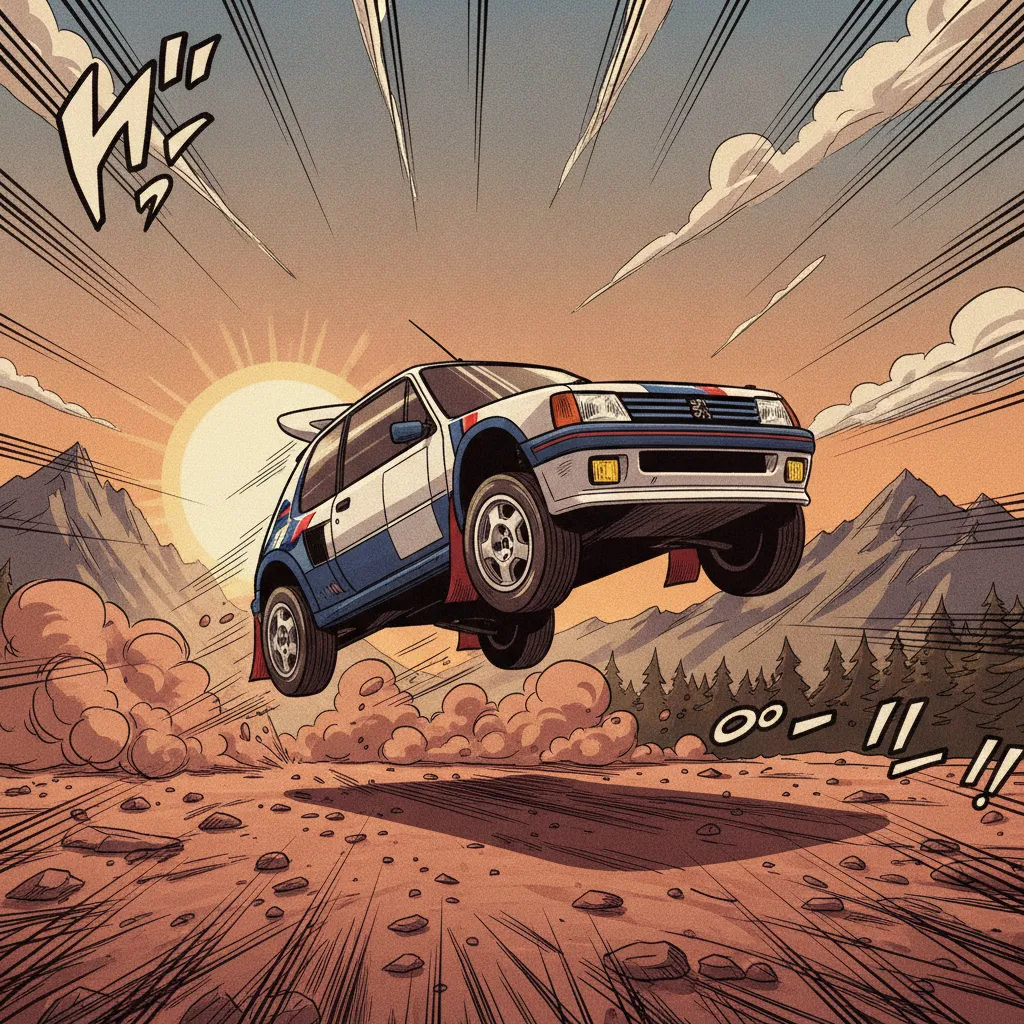
Few chapters in motorsport history resonate with the visceral intensity and unbridled engineering ambition quite like Group B rallying. From 1982 to 1986, this category unleashed a breed of 'homologation special' machines that were arguably the most powerful and technologically advanced rally cars ever conceived. With minimal restrictions on turbocharging, lightweight construction, and sophisticated drivetrain configurations, Group B became a crucible for radical innovation, forever altering the trajectory of automotive performance.
Engineering Extremes and Power-to-Weight Prowess
The core philosophy of Group B was simple: build 200 road-going versions, and then unleash a beast. Manufacturers like Lancia, Audi, Peugeot, and Ford threw conventional wisdom aside. Chassis designs evolved rapidly from modified production shells to bespoke spaceframe constructions, often clad in exotic lightweight materials like Kevlar and carbon fibre. Engines, typically displacing under 2.1 litres (with a 1.4 multiplication factor for forced induction), were tuned to produce upwards of 500-600 bhp, sometimes significantly more. This power, coupled with kerb weights dipping below 1,000 kg, resulted in power-to-weight ratios that rivalled contemporary Formula 1 cars – a truly terrifying prospect on a loose gravel stage with narrow trees.
The battle between two-wheel drive and four-wheel drive was central to Group B's drama. While Audi's Quattro pioneered all-wheel drive dominance, Lancia's rear-wheel drive 037 demonstrated the exquisite balance and agility still possible. However, it was the integration of advanced forced induction, often with anti-lag systems, and increasingly sophisticated differentials (both centre and limited-slip) that allowed these machines to translate colossal torque into incredible traction across wildly varying surfaces. Aerodynamics also played a burgeoning role, with massive wings and ground effect elements appearing, hinting at a future where downforce would be as critical as horsepower.
An Enduring Impact on Motorsport Engineering
The sheer velocity and inherent danger of Group B ultimately led to its discontinuation. Yet, its legacy is undeniable. The technical advancements, particularly in turbocharging, four-wheel drive systems, and lightweight composite materials, laid the groundwork for subsequent Group A and World Rally Car eras. Many technologies that debuted in Group B trickled down into road cars, pushing the boundaries of performance vehicles. Group B remains a powerful testament to human ingenuity and the relentless pursuit of speed, a golden age whose raw appeal and engineering audacity continue to captivate enthusiasts and engineers alike.
Ready to sell? List your rally car or parts for free.
Post an ad