Rally Eras & Class Evolution · 2026-10-20
Unleashing the Beast: The Enduring Impact of Anti-Lag Systems in Rallying
Dive deep into the revolutionary anti-lag systems, a technology that transformed turbo-charged rally cars from sluggish monsters into instant-torque machines, defining an era of relentless acceleration and driver mastery.
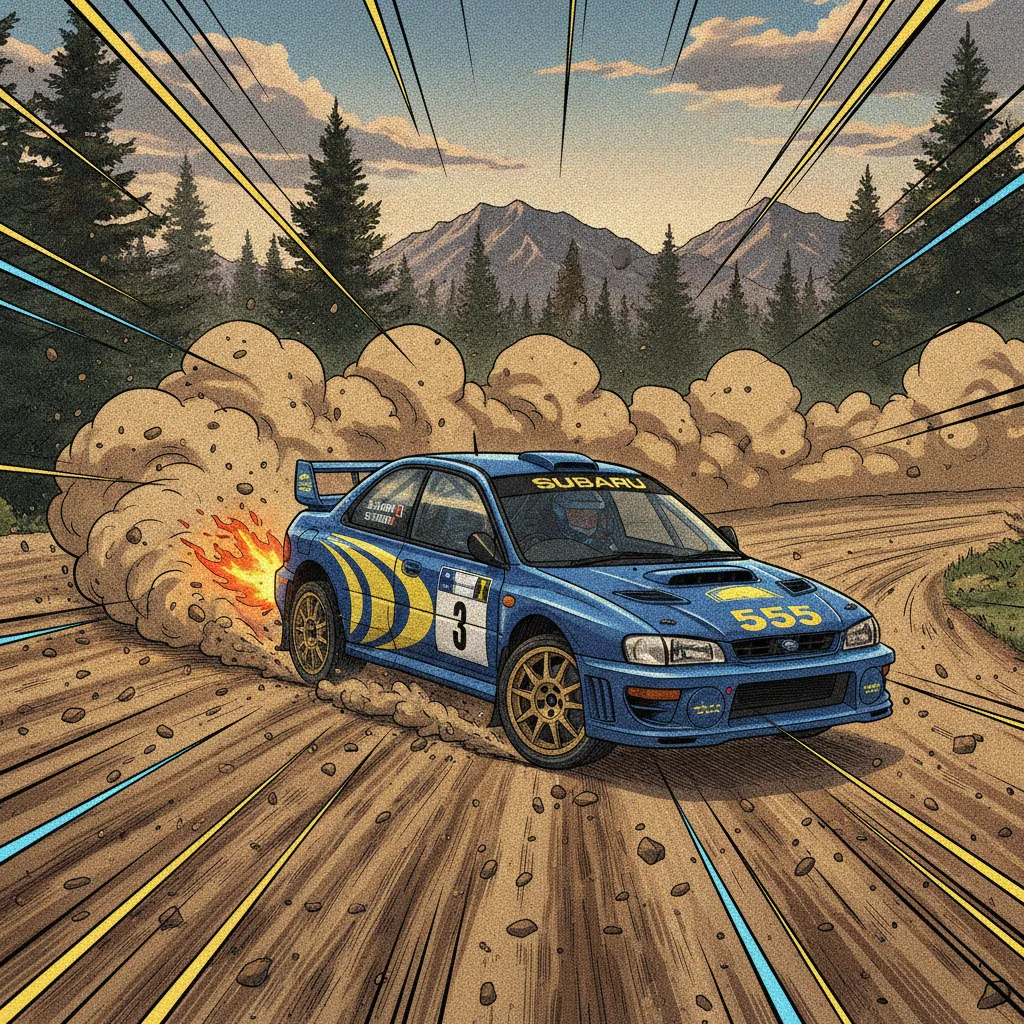
In the visceral world of international rallying, where fractions of a second dictate victory, the dreaded 'turbo lag' once plagued high-horsepower, forced-induction machines. Drivers grappled with a frustrating delay between throttle input and power delivery, particularly critical in the stop-start, tight-cornered stages that define the sport. The solution? The revolutionary Anti-Lag System (ALS), a technical marvel that forever changed the dynamics of turbo-charged rally cars and cemented its place in motorsport lore.
The Engineering Behind Instant Power
At its core, an ALS is designed to keep the turbocharger spinning at high RPMs even when the driver lifts off the throttle. This is achieved by intentionally igniting a small amount of fuel and air within the exhaust manifold, *before* the turbine. When the driver lifts, the engine management system (ECU) retards ignition timing significantly and opens a bypass valve (often called a 'bang-bang' or 'mis-firing' system) that routes fresh air directly into the exhaust. Simultaneously, fuel is injected into the exhaust stream. This mixture ignites, creating controlled explosions that continue to drive the turbine, maintaining boost pressure.
The auditory signature of ALS—a symphony of crackles, pops, and bangs—is as iconic as its performance benefits. It means that when the driver re-applies the throttle, the turbo is already spooled up, delivering instantaneous boost and eliminating the power void that previously hampered progress. This relentless on-demand power transformed the driving experience, allowing drivers to attack corners with unprecedented aggression, confident that exiting acceleration would be immediate and brutal.
From Group B to WRC Dominance
While rudimentary forms of anti-lag were explored earlier, it was during the Group B era that sophisticated ALS began to truly make its mark, helping to tame the immense power of cars like the Lancia Delta S4 and Ford RS200. As rallying evolved into the World Rally Car (WRC) era, ALS became an indispensable component, optimized and refined across generations of iconic machinery. Subaru's Impreza WRC and Mitsubishi's Lancer Evolution models, in particular, became synonymous with their audible and effective anti-lag setups, contributing significantly to their legendary status.
Modern rally cars still utilise advanced versions of ALS, albeit often integrated with more complex engine management and hybrid systems, continuously pushing the boundaries of power delivery and driver control. The system remains a testament to motorsport engineering's relentless pursuit of efficiency and performance, turning a significant technical hurdle into a defining characteristic of rally car prowess.
Ready to sell? List your rally car or parts for free.
Post an ad