Rally Personalities & Legends · 2026-11-20
Legends Forged in Fire: The Enduring Allure of Group B Homologation Specials
Delve into the mythos of Group B rallying, exploring the extreme engineering and raw power that defined these homologation specials, forever cementing their place as motorsport icons.
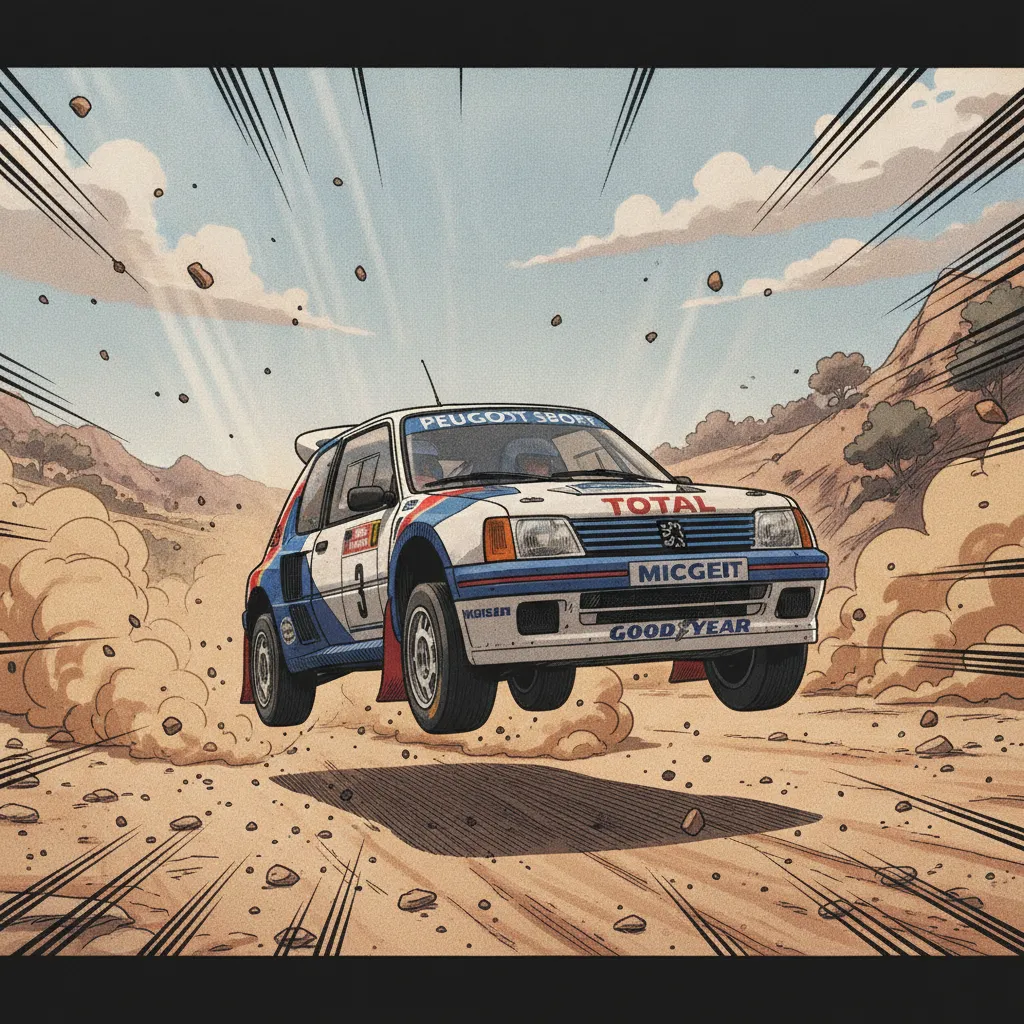
Few eras in motorsport ignite the imagination quite like Group B rallying. From 1982 to 1986, this category unleashed an unprecedented wave of engineering freedom, resulting in homologation specials that were, quite simply, monsters. With minimal production requirements (just 200 road-legal units for homologation), manufacturers pushed the boundaries of automotive design, creating purpose-built machines that redefined speed and spectacle on the world's most brutal stages. This era was a crucible of innovation, where raw power met cutting-edge chassis design, leaving an indelible mark on rallying and performance car development.
Unrestrained Engineering: The Birth of Monsters
The technical specifications of Group B cars were extraordinary for their time. Engineers were granted carte blanche, leading to a proliferation of mid-engine layouts, lightweight composite materials like Kevlar and carbon fibre, and sophisticated forced induction systems. Power outputs soared, routinely exceeding 500bhp and even pushing towards 600bhp in later evolutions. While early contenders like the Lancia 037 demonstrated the potency of a finely tuned rear-wheel-drive package, the true game-changer was the widespread adoption of advanced all-wheel-drive systems, pioneered and perfected by machines like the Audi Quattro. These complex drivetrains, often featuring innovative centre differentials and viscous couplings, were crucial for harnessing the immense power on diverse, low-grip surfaces.
Beyond engine and drivetrain, suspension technology also advanced rapidly, with long-travel setups, bespoke geometry, and adjustable damping becoming standard. Aerodynamic development, while still somewhat nascent compared to modern WRC cars, saw aggressive wings and spoilers appear, designed to provide downforce and aid stability at incredible speeds. The purity of Group B lay in its direct connection to the road car; the homologation special was essentially a thinly veiled race car, offering enthusiasts a glimpse into extreme performance rarely seen outside a competitive environment.
The Homologation Heroes and Their Legacy
Each Group B homologation special holds a unique place in history. The Peugeot 205 T16, with its compact mid-engine, all-wheel-drive layout, epitomized the perfect balance of power and agility, dominating the latter years of the category. The Audi Quattro S1, a groundbreaking AWD pioneer, showcased the ultimate evolution of its platform with its aggressive aerodynamics and blistering pace. Other iconic machines like the Lancia Delta S4, Ford RS200, and MG Metro 6R4 further cemented the category's legendary status, each contributing unique engineering philosophies to the arms race. Though tragically short-lived due to safety concerns, Group B's legacy endures. Its technical innovations paved the way for future rally cars and high-performance road vehicles, and the cars themselves remain highly coveted collectors' items, celebrated for their extreme design, raw power, and the unfiltered thrill they offered.
Ready to sell? List your rally car or parts for free.
Post an ad