Rally Personalities & Legends · 2026-11-15
The Unseen Ballet: Mastering Terrain Through WRC Suspension Artistry
In the brutal crucible of the World Rally Championship, victory often hinges on an unseen ballet of mechanical precision: the suspension system. This deep dive explores how rally engineers meticulously tune their machines to conquer the planet's most challenging terrains.
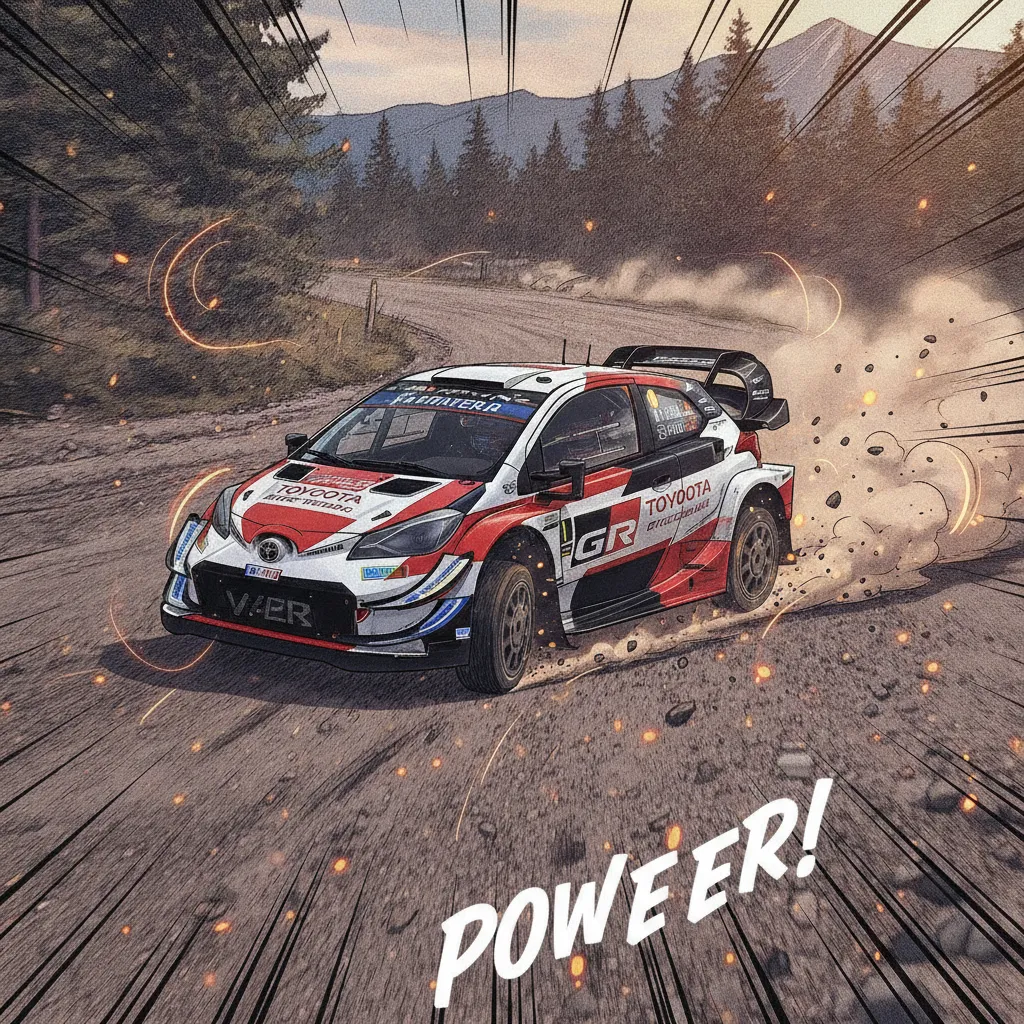
In the brutal crucible of the World Rally Championship, where fractions of a second decide podiums, the suspension system of a rally car is not merely a component; it is an unsung maestro. Far beyond simple springs and dampers, WRC suspension represents a pinnacle of motorsport engineering, a meticulous blend of kinematics and hydraulics designed to maintain optimal tyre contact and chassis stability across every conceivable surface – from jagged rock sections and loose gravel to ice-slicked tarmac and deep snow. The challenge is immense: a setup perfect for high-speed asphalt will be catastrophic on a rutted gravel stage. This demands an engineering artistry that constantly pushes the boundaries of performance.
The Anatomy of Adaptability: Springs, Dampers, and Geometry
At the heart of WRC suspension are sophisticated, multi-way adjustable inverted strut dampers, often featuring separate reservoirs for gas and oil. These marvels allow engineers to finely tune both high and low-speed compression and rebound damping – crucial for absorbing massive impacts (high-speed) while controlling body roll and weight transfer (low-speed). Paired with progressive spring rates, they manage the immense forces transmitted through the wheels. The geometry itself – camber, caster, toe, and roll centres – is equally critical, meticulously adjusted to optimise tyre contact patch and ensure predictable handling dynamics. Anti-roll bars, often adjustable, are employed to manage lateral load transfer, stiffening the chassis for tarmac stages or allowing more independent wheel movement on uneven gravel.
Hydraulic Bump Stops and Terrain Specifics
One of the most vital, yet often overlooked, elements for extreme terrain are hydraulic bump stops. Integrated within the damper, these provide additional progressive damping at the very end of the suspension travel, preventing harsh bottoming-out over enormous jumps or compressions. This allows for softer primary spring rates to improve traction on loose surfaces, while still offering robust protection against chassis damage. Engineers spend countless hours tailoring spring rates, damping curves, and ride heights for specific rallies, even for individual stages. A tighter, lower setup for tarmac maximizes responsiveness, while a longer travel, softer setup for gravel prioritizes traction and impact absorption, allowing the car to "float" over rough sections without losing speed.
The Driver-Engineer Synergy: A Continuous Pursuit
The feedback loop between driver and engineer is paramount. A driver’s nuanced input – how the car reacts to small bumps, mid-corner balance, or landing after a jump – translates directly into damper adjustments, spring changes, or geometric tweaks. This iterative process, honed over recce and shakedown, aims to find the "sweet spot" where grip, stability, and driver confidence converge. The evolution is ceaseless; new materials, telemetry data, and advanced simulation tools continually refine these systems, ensuring that today's WRC machines are not just fast, but supremely adaptable, transforming brutal landscapes into a high-speed playground for the elite. The art of suspension tuning remains the bedrock upon which rally glory is built.
Ready to sell? List your rally car or parts for free.
Post an ad