Rally Personalities & Legends · 2026-11-13
The Symphony of Speed: How Engine Notes Guide Rally Drivers
Beyond raw horsepower, the distinct engine note of a rally car is an indispensable feedback loop for drivers, dictating gear changes, load management, and stage rhythm. This auditory science is paramount for peak performance.
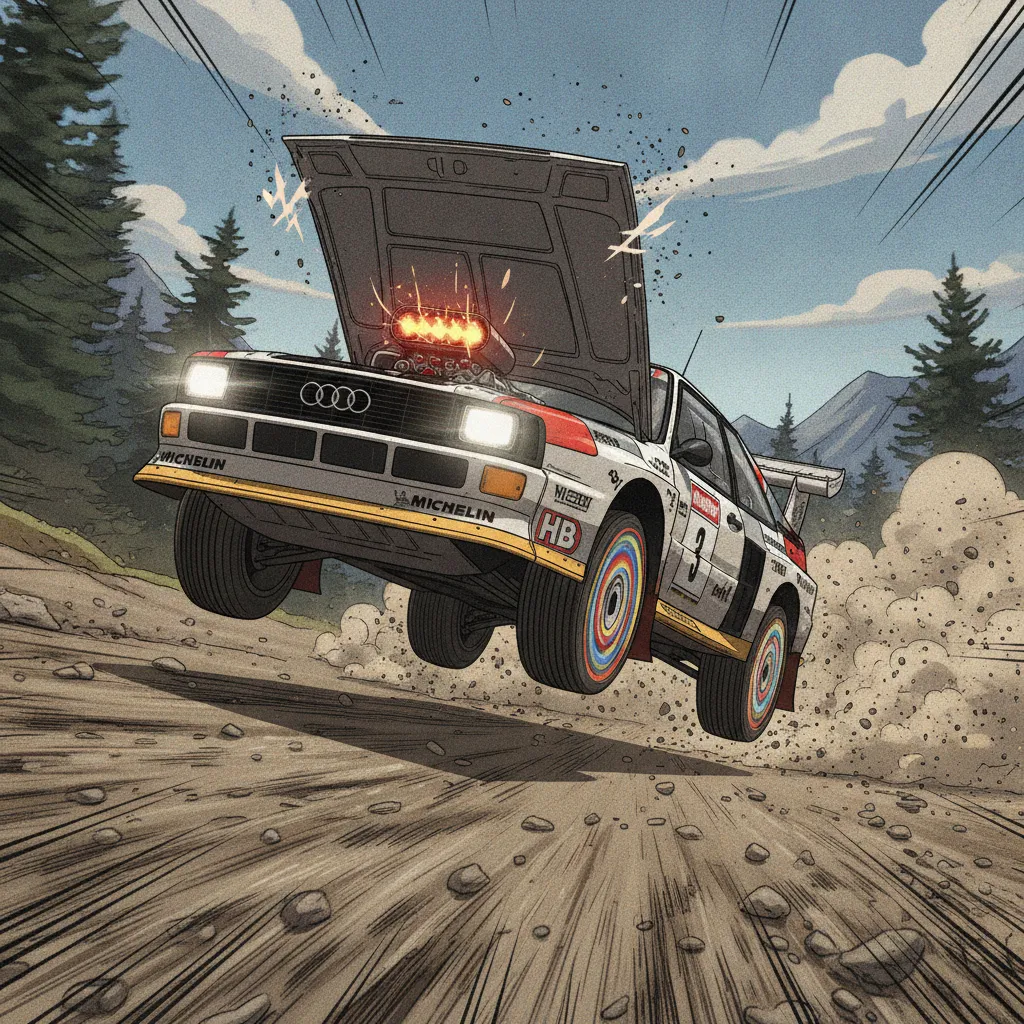
In the high-octane world of international rallying, victory is often found in the most nuanced forms of driver feedback. While visual cues and G-forces are crucial, the often-underestimated 'power of sound' – the intricate symphony emanating from a rally car's engine – provides a critical layer of information that seasoned drivers instinctively process. It's not just noise; it’s a direct conduit to the machine's heart, communicating vital metrics before any dashboard display can register.
The Auditory Language of Performance
For a rally driver, the engine's roar is a constant stream of data. The rising crescendo of RPMs signals the approach of the rev limiter, demanding an instantaneous upshift to maintain momentum within the engine's optimal torque band. Conversely, a sudden drop in pitch or a struggling growl indicates engine lugging, necessitating a downshift to bring the turbocharger back into its efficiency sweet spot or to access immediate power delivery for corner exit. The nuanced crackle of a misfire, the precise whir of a healthy turbo spooling up, or the subtle variations in exhaust resonance across different loads – these are all auditory cues that inform throttle modulation, clutch engagement, and differential settings.
Technical deep dives reveal how engine harmonics are inherently linked to mechanical stresses and combustion efficiency. The characteristic thrum of a flat-four boxer engine, the piercing shriek of a five-cylinder turbo, or the throaty growl of a naturally aspirated V6 – each configuration delivers a unique auditory signature. Drivers develop an innate understanding of these sonic fingerprints, enabling them to detect tire slip on loose surfaces, anticipate traction limits, or even diagnose minor mechanical issues long before they become critical. This subconscious processing allows for split-second adjustments, shaving vital tenths off stage times.
Evolution of the Engine Soundtrack
From the naturally aspirated screamers of the Group B era, where engine tone was pure, unadulterated power output, to the sophisticated, electronically controlled turbocharged powerplants of modern WRC machinery, the engine's voice has evolved. While contemporary telemetry provides an avalanche of data, the primal, direct connection through sound remains irreplaceable. It bridges the gap between mechanical engineering and human instinct, transforming raw engine dynamics into actionable feedback for the driver. In the relentless pursuit of speed, the ear remains as vital a tool as the eye and the foot, making the engine note an unsung hero of rally car control.
Ready to sell? List your rally car or parts for free.
Post an ad