Rally Personalities & Legends · 2026-11-09
Kinetic Ballet: Mastering WRC Dynamics Through Advanced Suspension Tuning
Dive deep into the sophisticated engineering of WRC suspension systems, where every adjustment is a finely calibrated dance between physics, driver feel, and the relentless demands of the world's toughest stages.
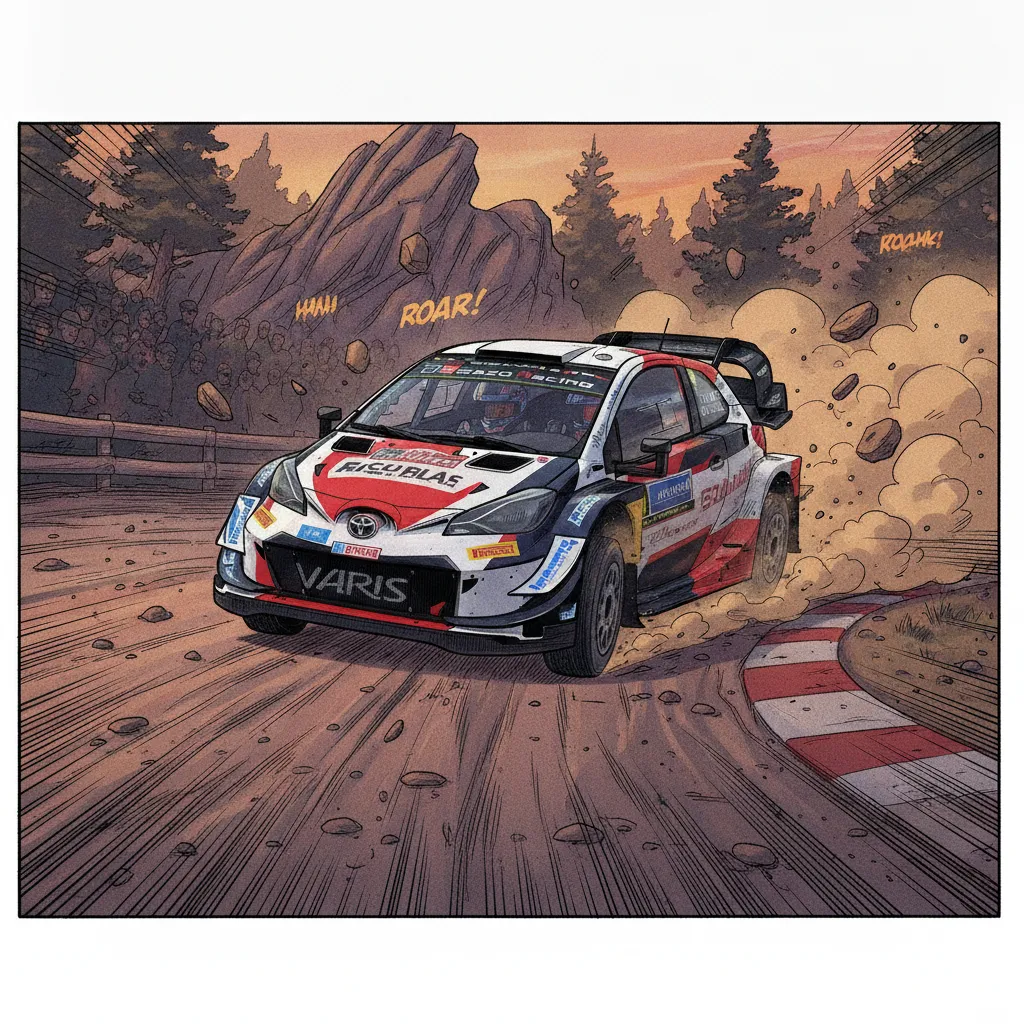
In the visceral world of the FIA World Rally Championship, where fractions of a second decide victory, the suspension system of a Rally1 car is arguably its most critical, and most complex, performance component. Far beyond mere shock absorption, it’s a kinetic ballet, an intricate symphony of mechanical forces orchestrating grip, stability, and driver confidence across an unforgiving tapestry of surfaces. The ‘art’ of suspension tuning lies in striking a delicate balance, transforming a potent homologation weapon into an extension of the driver's will.
The Anatomy of Rally Dynamics
Modern WRC suspension systems are marvels of engineering. Multi-way adjustable dampers, often featuring separate high and low-speed compression and rebound circuits, allow engineers to precisely control wheel movement and energy dissipation. Coupled with carefully selected spring rates and anti-roll bar stiffnesses, these components dictate the vehicle’s roll, pitch, and heave characteristics. On gravel, a softer setup provides vital compliance, allowing the wheels to track the terrain’s undulations, maintaining critical contact patch integrity. Conversely, on tarmac, stiffer springs and dampers, combined with more aggressive anti-roll bar settings, minimize body roll for precise turn-in and maximum lateral grip.
Beyond the primary components, the kinematics of the suspension arms and the geometry settings are equally crucial. Camber, toe, and castor angles are meticulously adjusted to optimize tire contact patch under dynamic load, influencing everything from steering response to tire wear. This is where the 'art' truly merges with science. Engineers interpret vast quantities of telemetric data – wheel travel, G-forces, damper pressures – to refine settings. Yet, the subjective feedback from the elite rally drivers remains paramount. A driver’s nuanced perception of understeer or oversteer, of how the car ‘feels’ on the limit, often provides the qualitative data that quantitative sensors cannot capture.
Ultimately, the perfect suspension setup is an elusive target, constantly chased across diverse rally stages. From the icy grip of Monte-Carlo to the punishing rocks of Sardinia, every rally demands a bespoke approach. Mastering this dynamic equilibrium, where mechanical precision meets human intuition, is not just about engineering; it's the very heartbeat of a championship-winning WRC campaign, defining how efficiently horsepower translates into forward motion and how deftly a car conquers the world's most challenging terrain.
Ready to sell? List your rally car or parts for free.
Post an ad